I'm Ky-ree Toadvine, I'm 25 years old,
and I'm a firefighter.
I graduated high school in 2009,
from Crenshaw High School,
and I was initially going to Cal Poly Pomona
for mechanical engineering.
I was pursuing that for a while,
thinking I wanted to do something mechanical.
It didn't really necessarily work out,
because I could tell by the way
that my performance was
that I wasn't very passionate about it.
So I decided to dial things back a little bit
and go take different classes at a community college.
And at that time when I was looking up classes,
I actually had a personal emergency happen,
not to me, but someone dear to me,
that required the response of firefighters
and transport to a hospital.
That's when I realized that,
what type of job they have.
They have something that was dynamic,
something that was always changing,
and it just required you to be able to
have a working knowledge and skill set
that isn't, that doesn't require you
to just sit at a desk,
but also requires you to be able to
continuously think in many different ways,
and adapt as the times come.
And that's when I knew that
that was something that I wanted to do.
That was along the lines
of what I wanted to do with the rest of my life.
So the steps needed to become a firefighter would be
to first have your high school diploma or an equivalent,
to have your EMT certification
and be at least 18 years old.
Once you meet those requirements,
then you can apply to many different departments;
larger departments mostly.
If you would like to open up that,
if you would like a wider array of departments
to be able to apply to, for example to smaller departments,
then you would need something like a fire academy,
some smaller departments would like for you
to be a paramedic as well.
So I enrolled in community college,
took my Emergency Medical Technician class,
and it teaches you the basics
for basic life-saving skills basically.
You can, it certifies you to do basic things
like take blood pressures, and respond to emergencies,
and gets you ready mentally, especially,
to be able to to respond to these incidents
and know the tools that you have
on board of the ambulance,
so that you can use, you can utilize them effectively
to actually respond to these emergencies.
After I finished my Emergency Medical Technician class,
I wanna find a job that does emergency transports
with another fire department
within the city of Los Angeles.
I continued to work there for two years,
and at that point,
I gained experience
and responded to many different emergencies,
whether it be a gun shot wound victim,
a stabbing victim, or just someone
who needs to be transported from a hospital
to another hospital.
Those are called inter-facility transports
versus an emergency medical transport.
That gave me loads of experience
doing the inter-facility transports
and the emergency transports.
The emergency transports gave me the,
I would say, poise and knowledge
to be able to use the tools and knowledge that I have
that I gained from my Emergency Medical Technician class
to respond to different emergencies,
and an inter-facility transport
gave me loads of experience with just dealing with people,
just being able to make sure
that I'm a people person,
and that really lets you know
if you're cut out for this job.
The Fire Academy was pretty rigorous.
We had, every day that we went in,
we worked 10 hour days for four days, sometimes five,
where we come in for an extra day for a few hours
to get more practice on whatever tools
that we needed to get more practice on.
During those days we will start each day
with physical fitness.
So we would go into the gym that we had,
and we would do whatever training regimen
the cadre had for us.
We would do that for an hour, hour and a half,
two hours tops,
and then we would get that part of the day done,
we'd set up for the rest of the day as well,
and then get into whatever training
that we may have had.
For example, firefighter survival,
which is making sure that we keep our cool
and that we're able to get ourselves
out of entanglements or collapse,
or know what to do when we can't get ourselves out
to put out that Mayday call.
Every fire department has a test,
and an interview that you must pass
in order to become an entry level firefighter
with that department.
So different fire departments have different tests,
and they're geared towards different things as well.
Some tests may have basic math and English on it,
and some may go a little more in depth to other things
that the department may want to
gear their hiring towards,
or to gear the type of people
that they want to hire towards.
So once you graduate the academy,
then you start your probationary year,
and at that point, you start to learn the different tools
and the different tools and tactics
that you need for fire suppression efforts.
You also have to continue to train
on the things that you learned in academy,
for example, throwing ladders,
and what we call phase testing,
which is actually taking some of the things you've learned
while during the academy,
and actually doing them.
The growth opportunities are vast.
You can go into pretty much anything.
If someone wanted to be an emergency dispatcher
and see what that was like,
they can go into the dispatch arena
and become a dispatcher for a while.
If you wanted to be a fire inspector,
you could be an inspector.
If you wanna be a paramedic, you could be a paramedic.
If one day you wanna become a captain,
then of course that takes a larger skill set
than maybe the rest of the professions,
but then you'll have to continue to make sure
that you're as studious as possible
to pass that captain's test,
and also pass that captain's interview to become a captain.
And then there are two ranks of captain as well.
If you wanted to go even higher than that,
to become a chief,
then you can do that as well later on in your career.
So the life of a firefighter
is pretty much a long learning process.
As long as you're career,
you will be learning something new almost every day.
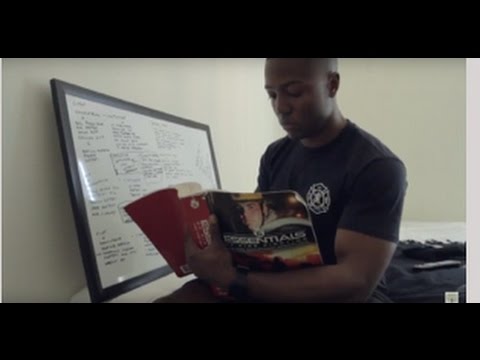
My advice to people just starting out
trying to become firefighters
is to go as hard as you possible can,
get as much under your belt as you possible can.
Myself personally, I did everything I could
to make myself stand out,
and I also did everything I could
to make sure that that interview went well.
For example, when I was a CPR instructor,
I did that so that I can hone
or perfect my speaking skills for the interview.
And I believe that helped me tremendously.
You have to recognize your own weaknesses,
and you have to fix it or capitalize off of it.




 For more infomation >> Toyland | Pedro Xavier | Music Video - Duration: 1:38.

Không có nhận xét nào:
Đăng nhận xét