Hello everyone! Thanks for watching!
Hello everyone! Thanks for watching. Please SUBSCRIBE, LIKE and SHARE our video.

Đăng ký:
Đăng Nhận xét (Atom)
-------------------------------------------
Reaction - Jangan gitu dong Ayu tingting (official music video) Reaksi Orang korea - Duration: 5:47. For more infomation >> Reaction - Jangan gitu dong Ayu tingting (official music video) Reaksi Orang korea - Duration: 5:47.
 -------------------------------------------
Learn Colors with Police Suv | ABC song for Children | Educational Video - Duration: 30:56.
Do you know your A-B-C's
A - B - C - D - E - F - G H - I - J - K - L - M - N - O - P
Q - R - S - T - U- V, W - X - Y and Z
Now I know my ABC's Next time won't you sing with me.
A - B - C - D - E - F - G H - I - J - K - L - M - N - O - P
Q - R - S - T - U- V, W - X - Y and Z
Now I know my ABC's 26 letters from A to Z
26 letters from A to Z
-------------------------------------------
Employment Relations Amendment Bill - Committee Stage - Clauses 1 to 3 - Video 6 - Duration: 5:23. For more infomation >> Employment Relations Amendment Bill - Committee Stage - Clauses 1 to 3 - Video 6 - Duration: 5:23.
 -------------------------------------------
Misuse of Drugs (Medicinal Cannabis) Amendment Bill - Committee Stage - Clauses 1 - Video 1 - Duration: 7:10. For more infomation >> Misuse of Drugs (Medicinal Cannabis) Amendment Bill - Committee Stage - Clauses 1 - Video 1 - Duration: 7:10.
 -------------------------------------------
Rotifera Video - Duration: 6:01.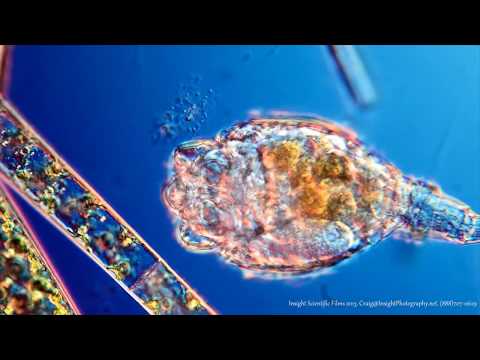
if everyone were cast in the same mold there would be no such thing as beauty
Charles Darwin beauty is found in the uniqueness of life and from mighty
elephants to delicate daisies to the microscopic world of bacteria everything
has a place and the purpose in this world yet there is a certain area of
life specifically animal life that is not commonly examined the phylum of
Rotifera. They are dubbed rotifera for the rotating
cilia at the organisms mouth used for feeding. These planktonic creatures range
in size from about two hundred micrometers to five hundred micrometers.
they are able to live in a variety of habitats including lakes, rivers, streams,
delta, estuaries, on mosses, and moist soil. They are even able to sustain in
gutters, drainage pipes, even sewage treatment tanks. The typical life span of
a Rotifera is about one to a few weeks but rapid reproduction allows Rotifera to
proliferate in mass quantities. Rotifera reproduce both sexually and asexually
and they do not have a particular breeding season.
parthenogenesis is the process by which female Rotifera reproduce eggs that can
develop and hatch into a female individual without fertilization. Females
produce up to seven eggs at a time which all happens within 12 hours and reach
sexual maturity within 18 hours after hatching. In fact males are very rare or
unknown in most rotavirus species the male individuals that do exist have a
single testes connected to a sperm duct and digestive system. In Rotifera
species that sexually reproduce the degenerate male inserts its reproductive
organ into the female so that it can inject sperm through the body wall of
the female into the blastocoel. Eggs are released hatched in the water or may
attach the posterior end of the rotifer until it hatches. Most rotifers are
omnivorous although some are known to be cannibalistic. They eat unicellular algae
protozoa, bacteria, phytoplankton, nano plankton, and other dead or decomposing
organic matter. All Rotifera are filter feeders however the exact
mechanism of feeding varies by species most rotifers have cilia in their mouths
that move to create a feeding current. Other rotifers have pincher like jaws
that grasp and pierce food particles. Locomotion is achieved by rotating its
Cillia near its mouth or by attaching the foot with
secretions then extending its body attaching its head and then releasing
the foot and using its muscle bands to move forward. It can be sedentary or
free-swimming. This creature also is categorized as protostomes meaning the
mouth forms before the anus during embryonic differentiation. Rotifera have
bilateral symmetry in an open circulatory system. They have no specific
organs for respiration instead that can exchange gases by diffusion across their
body wall. Being sued osela mates the mesoderm partly lines a fluid-filled
body cavity that loosely holds their organs in place. They do not require a
circulatory system because their relative small size allows water
nutrients and waste to diffuse across their body wall. Their nervous system is
comprised in a small brain and a few nerves that extend from it into the rest
of the body. Their physical support system is
hydrostatic. In addition to being fascinating organisms to study Rotiferas
also have several convenient properties that are especially suitable
for use in lab. Their small size and rapid reproduction make them easy to cultivate
and their short life cycles allow adverse effects to be observed
relatively quickly. This makes them an ideal indicator for predicting the
global ecological impact of chemicals that frequently collect in bodies of
water such as pesticides and industrial waste run off. In addition to laboratory
use Rotifera are commonly used in fish aquariums to assist with the
decomposition of waste and lengthen the intervals between disruptive cleaning
cycles the closest relative to Rotifera in the morphology tree is Chordata
Athropoda, Annelida, Echinodermata and Mollusca the closest relative to Rotifera
in the 16s RNA tree is Mollusca. The two trees differ from each other as
rotifer is seen as a more primitive species in
terms of physical traits. But it has a lot more in common with
species based on its DNA. Therefore Rotifera branches off earlier in the
morphology tree than the 16s RNA tree. This tree shows the phylogenetic
relationships between 67 taxa using the 18s RNA gene it was developed as part of
a study to evaluate whether or not the 18s RNA gene can be used as a
phylogenetic marker. The tree indicates that rotifers sister taxa are a Acanthocephala,
a phylum of parasitic worms. Differences in rotifers placement in the
18s RNA tree and the 16s RNA tree could be due to differences in ribosomal
structure. The tree based on morphological traits is likely the least
accurate because it is based on physical traits that may or may not be homologous.
Rotifera have a very small fossil record researchers have yet to determine
how and where they originated. The earliest fossil evidence of Rotifera is
between 35 and 40 million years old and was discovered on bracts of moss in the
Dominican Republic. They have changed very little in morphology or ecological
role during this time. Thank you to Dr. Tse Dr. Willette, Sara Shapiro,
Tanya and the entire LMU Biology Department.
-------------------------------------------
Funny Golden Retriever Playing With Baby - Cute Baby Video - Duration: 3:41.
Hello everyone! Thanks for watching. Please SUBSCRIBE, LIKE and SHARE our video.
Không có nhận xét nào:
Đăng nhận xét