Thứ Hai, 9 tháng 1, 2017

Waching daily Jan 9 2017

WE'RE LIVE IN UNION SQUARE, ALI

BAUMAN, CBS 2 NEWS.

NEW INFORMATION IS NEW IN

THE DEADLY SHOOTING OF AN

INNOCENT BYSTANDER IN THE

BRONX.

POLICE ARRESTED THIS PICTURE

OF.

THE MOTHER OF FOUR WAS WALKING

HOME AFTER PICKING UP DINNER

FOR HEIR CHILDREN AFTER SHE WAS

HIT FRIDAY.

HER LONG TIME BOYFRIEND AND

FATHER OF HER CHILDREN PLANS TO

For more infomation >> New Video In Killing Of Mother Of 4 - Duration: 0:22.

-------------------------------------------

CHANNEL UPDATE AND 300 SUBSCRIBERS! - Duration: 5:23.

Subtitles...

Intro, blah blah blah

awkward studdering

more blah

stating the obvious ʕ•ᴥ•ʔ

Weird "YAY"

The video starts randomly zooming in on random things on the screen while Cman says stuff.

Cman jokes about the face revial.

AHH

What was that?

AHHHHHH!! WHAT IS THAT THING?!?!

For more infomation >> CHANNEL UPDATE AND 300 SUBSCRIBERS! - Duration: 5:23.

-------------------------------------------

Gamusa | New Assamese Bihu video song|Siddarth Sinha & Madhushmita|Singer:Aveenab & Bornali kalita| - Duration: 4:25.

For more infomation >> Gamusa | New Assamese Bihu video song|Siddarth Sinha & Madhushmita|Singer:Aveenab & Bornali kalita| - Duration: 4:25.

-------------------------------------------

The 6th Key: Video - Duration: 1:34.

Today, marketing isn't just a creative discipline —

it's also a technical one.

Just look at the explosion of marketing technology startups in the last five years.

As CMOs adapt to this major shift,

we expect their overall technology spend to increase ten times over the next ten years.

Money alone won't do it though —

navigating the complexity of a changing industry demands a great framework.

That's why last year we published the 5 keys to unlocking the decade of the CMO,

organizing principles meant to help you achieve great things.

But today it's time we add a sixth key:

video.

Because it's the digital video revolution that will be marketing's next defining moment.

The amount of time Americans 18- to 24-years-old spend watching traditional TV

has gone down by 38% in the past five years,

while 70% of Generation Z prefers streaming over broadcast or cable.

Soon, VR will be as widespread as smartphones are today.

What once seemed simple is now nearly infinitely complex.

CMOs are responsible for delivering authentic, customized content across

an ever-growing number of devices, channels, platforms, and media —

and they have to do it every single day.

We know, it's an enormous challenge.

But for those companies willing to take the lead,

this era will offer dazzling opportunity.

For more infomation >> The 6th Key: Video - Duration: 1:34.

-------------------------------------------

Why is video good? - Duration: 0:41.

For more infomation >> Why is video good? - Duration: 0:41.

-------------------------------------------

NOKIA 6 LAUNCHED!! MY WORDS || FIRST VIEW - Duration: 2:43.

For more infomation >> NOKIA 6 LAUNCHED!! MY WORDS || FIRST VIEW - Duration: 2:43.

-------------------------------------------

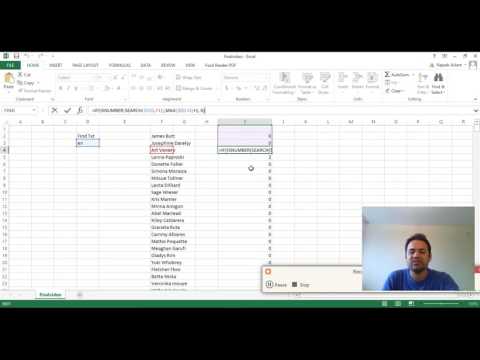
My Edited Video - Duration: 12:42.

Its Najeeb. I'm student of TU Delft in the

in the department of electrical

engineering mathematics and computer

science today in this video I'm going to

show you where using office simple Excel

formulas to make our excel sheets more

interesting and more effective to deal

with in the course of programming and

data science for 99 person we have a

learning numerius very basic formulas to

make our complex data analysis tasks

very easy so in this video i will use

these same basic formulas to

implement a searchable list. As you know

when we deal with the with the excel

formulas and Excel sheets we normally

deal with a huge list of numbers for

example the list of names and thousands

of the names so if we want to search

something out of the names It's really hard

to search the some text from the

huge list of names or

anything and it's become even more

harder if we don't know that exactly

what we are looking for example if we

only know that maybe the second name of

a person or maybe even a few charcters

in the middle name of person, so

it's really effective if we can

implement a searchable list in our

excel sheet. so i will implement this.

searchable list without using any arrayList or

any activex component i

will use all the basic formulas that we

have learned.

we can implement so let's start our

implementation so this is that this is

the the text box where I will put my text to be searched. but i will put my text research

and i will start from the first function

with the search formula so the search

formula is very basic to search something

out of the string so in search formulas

I will use

as the target and list from this list

we're from this list so maybe you so

Because I will always put my text here

put my text here so I will lock

it with $ sign or F4.

Now I can type anything

in this textbook so i will type AB.

example

and It giving me

the the #value. it's giving me

the value because it it couldn't find

anything in this if I will drag it to

rest of cells so in most of the cases I found

value i couldn't find anything but you

see in one of the column i found one

so this is the position of the text

I found my targeted tax so i can i can

generate for example I you put the I so

it gave me gave me another cell that is

well that is wrong number nine and it

giving me seven so it's again the

starting position of of the text that I

want to search

ok so it's fine and about actually don't

want to see a value with the combination

of numbers of the values from and also i

will wrap this function and with another

function that is his number-two to just

see that if ya if it could find from the

tax included display and the number

otherwise it will be displayed nothing

so it is displayed to this fall's very

we found something it will return me

true and otherwise it began tested again

we are going to find it like TS or it

it gave me through somewhere here you

can see true look so so but I actually i

will change it a bit further

I don't want to see true or false i will

wrap it further with the if condition so

if it is if it is true it will

give me one and if it is false it will

we give me 0 so it will let me go

further closer

what I want to do it so I will drag it

to rest of the cell and i will see how

to hear you see it is working fine and

but i will write some other text for

example i will type for their half our

double and our Father and yeah it

it gave me something it to pull their

own number six

slow starts working fine so up to now

it's it's fine but my goal is not just

to c 0 1 10000 to see if it is brandon

my goal is to to search all the cells

that contain the target text that I have

put it in this set so for the before

this the preferably is to use the max

function so the what the max function do i will

explain it later, first I will a Implement

that max function. I will use max from the

first cell to the rest of cells so here

you see, lets drag it down and hear

something out

and so this is the example I want to

such en okay you're so it's working fine

what actually the the max function does

max function start from the beginning

here for example i gave it start from

the beginning and right from the

beginning to fill their cell it counts

the maximum number that if we get and

before that before to put its own

value in the cell it will increment it

with one to put the number

example if I found here one occurence in the

next occurrence it we find the maximum

til that cell here the maximum till

that so you can see all these

green and green area on the

maximum number is 1 and then before to

put here it will increase here it will

implement it with one input we can test

it with some other number for them well

we can just put a hour you see it

started from the beginning of the first

occurrence second third 456 still here

and hit found the 16 and then and 17 and

18 column it had nothing so I i can see

here because i have not dragged it

till here i can further drag it to all

the cells to see the effect more clearly

here you see

it counted till 16 and next next two cells

it doesn't contain 'A' and then and for

the further cell it

it found a but it is counted from the

beginning you you can

you can see from here you see it counted

from the beginning till that cell and

put the maximum ok now i am moving this

this row to the left of the names list

to get further closer what I actually

want to do I got it and I'm going to cut

this and going to paste in this so here

I i have the same implementation and

I can type anything in it and you see

If I type, I have no occurrence, so i will type

sage and you see here it gave

me the exact match

ok so the next function i'm going to use

is Row function row is a very useful

function to get list of incremented

numbers so here it is

row function and i will give this cell

and i will start from the first of the cell

drag it down so here give me an

increment function so i will combine and

this Row function with the vlookup and

in the Conjunction of these two these two

cells to get the dynamic list of names

of all the person containing the text that

i will put in this box

so let's wrap it with the vlookup

so wrapping it with vlookup

function we look at something like that

in Vlookup function we we are using

we're rapidly using row and in

there

in the next to the road we are using

this table at least the list of

occurrences that we implemented using

the search function and then and then

actually using the name of the list and

we get the second column and 0 as a full

match so here you see we got siege

wisiter that contain the text that it is

in the box it is in the sage in the 10th row

we can drag it down

to get the list also so something went

wrong. so the problem is because it

found the this text inside this and if

it couldn't find it returns NA values

so we get rid of this by wrapping this

function further in ifError, we already have

used iferror function in our course

if error and it will return the

empty string if it will get an error so

we dragged it to see the effect here you

see we got only the the string that

contain the name that contain this text

we can type something else for example a

a and get nothing. we can type a to give a

a list of names that contain a so

here we have a very simple such search

box maybe we can something and it will

narrow down over such criteria by giving

all the names that contains this text further

we can also implement something to

get the total list of names that contain

this because here we don't know how many

names contain these texts so we can use

countif functions. the count

count if function and in countIf function

will give the Ranger ,Ranger starting

from i1 and range starting from I one

to I don't know, lets say I30 and the criteria

is anything anything means if there is

something in the less than it should

counted so for anything we can use ?

followed by a * inside in inverted commas

so here it is we can find

see that there are total 17 matches that

contains a so for example we can type it

again

so again Y U, it's one then we

can type anything our it give one and

anything for example here ai give to so

here this is box maybe type

anything and it's quite dynamic will

generate a dynamic list of all the names

containing this text and we also

getting the total count in this column

that's all

so this is how we can implement such

using all the very simple formulas

that we implemented in our course thank

you very much for watching this video

hope it will be useful to for the further

Excel exploration

thank you

For more infomation >> My Edited Video - Duration: 12:42.

-------------------------------------------

What is in here? - Duration: 3:07.

For more infomation >> What is in here? - Duration: 3:07.

-------------------------------------------

Clone DB FTP Files: Content and Uses for Genome Assemblies - Duration: 9:32.

The NCBI Clone database integrates information about clones and libraries, including sequence

data, map positions and distributor information.

This video focuses on the Clone DB FTP files, which can be a great help in improving genome

assemblies, detecting potential structural variation, and placing clones based on clone

end sequences.

Also see the companion video about using clone placements to interpret and improve assemblies.

A link to that video is provided at the end of this video.

Let's start on the Clone DB home page.

For general information and Help, use the links under Getting Started.

I'll go to the FTP site using the link under Tools.

You see two top-level directories here, reports and utility.

The utility directory contains scripts that you can use for bulk download of FASTA sequences

for clone ends.

This README file explains how to use these scripts.

The reports directory is organized alphabetically by organism scientific name, and the README

files provide detailed descriptions of each file, including column identifiers.

I'll use chicken, Gallus gallus as the example for this video.

The files here provide information about the sequences and genomic placements for the clones

in Clone DB.

You find library-specific files, such as CH261 and J_AC, that begin with their Clone DB genomic

library abbreviations, then at the bottom are files general to the organism; Gallus

gallus has taxid 9031.

Let's review these files to see how they can help you.

We'll first look at files with information about all libraries for this organism.

At the bottom of the page, library_9031.out provides general data such as the total number

of clones with end sequences, with inserts, and that have both ends sequenced.

These numbers are given for each library and vector type.

The clone_acstate.out report provides sequence identifiers and metadata for the inserts.

FASTA for these insert sequences can be downloaded using the E-Utilities, our API for accessing

Entrez Nucleotide.

Likewise, endinfo_9031.out provides lists of sequence identifiers and metadata for the

end sequences.

To download the FASTA for these sequences, use the identifiers as input to the Perl script

in the utility directory we saw earlier.

Notice that both the clone_acstate and endinfo.out reports are available in *library*-specific

and across library versions.

The remaining files are associated with clone placements, a valuable tool for assembly assessment,

but many researchers lack the resources to generate them in-house.

Here, the data are immediately available for your use and interpretation.

Clone DB generates clone placements by aligning end and insert sequences to NCBI-annotated

genome assemblies and assigning the clone one or more, or possibly zero, genomic locations.

In order for a clone to receive a placement based on its end sequences, both ends must

be placed on the same assembly molecule.

For additional details about the clone placement process, see the Clone Placements FAQ.

All of these library-specific .gff files follow the same naming scheme.

The library abbreviation is followed by the accession.version of the assembly on which

the clones are placed.

This is followed by the Clone DB placement release ID, which defines the set of clone

sequences and software versions used for the placements.

And finally, the type of placements contained in the file, such as, both ends not uniquely

placed or both ends uniquely placed.

See the README_GFF.txt in the reports directory.

Note, you may find some legacy files that pre-date the use of the release id, as show

here.

Clone DB suggests always using the most recent files, unless your analysis specifically calls

for an older set of placement data.

Now let's take a closer look at how these data can help you.

I'll cover the four general tasks shown here: - Generate basic assembly QA stats

- Fill in assembly gaps - Detect mis-assembly and structural variation

- Place unlocalized or unplaced assembly molecules

And in some cases I'll use screenshots from our Genome Data Viewer to graphiclly illustrate

these tasks.

Be aware that in most cases, the task is best completed by parsing and analyzing the clone

placement files.

For the first task, generating assembly QA statistics, clone placement data can provide,

- the percentage of clones that are placed - concordant vs. discordant placements, and

- unique vs. non-unique placements

For these analyses, the clone end placement summary report, as well as the 3 clone placement

GFF files, unique_concordant, unique_discordant and multiple, are easily parsed to provide

this information.

To identify clones that contain sequence missing from an assembly, you can identify assembly

gap locations from the organism's Assembly AGP files in the /genomes/genbank FTP site.

To get these files for chicken, go to latest_assembly_versions, on to assembly_structure, Primary_Assembly,

assembled_chromosomes/, and finally, the AGP directory.

Again, use the AGP files to get assembly gap locations.

With those locations, you can parse the unique_concordant and unique_discordant placement files to identify

clones that span the gap locations.

This graphic shows that clone CH261-52K22, and several other unique_concordant placements,

spans this assembly gap in chicken chromosome 1.

Likewise, end placements near and properly oriented towards gaps may identify clones

that project into, but do not span gaps.

Use the single_end_placed files for this.

The third task is to detect regions with mis-assembly or structural variation.

These are typically revealed by analysis of discordant clone placements, that is, placements

which are larger, smaller or oriented contrary to the corresponding assembly region.

One example of using discordant placements to identify a potential region of mis-assembly

is illustrated on chicken chromosome 6.

Here we see a tight cluster, by location, of 3 discordant placements from the J_AC and

J_AD libraries in which the ends align in an inverted orientation relative to this assembly

component.

Library tracks like these present data from the unique_concordant, unique_discordant and

multiple GFF files.

This pattern suggests an issue with the orientation of this component in the assembly, consistent

with the report of an assembly error at this location to the Genome Reference Consortium

(GRC), the group that maintains the assembly for this organism.

Another example is illustrated on chicken chromosome Z.

Here you see a dramatic shift from unique concordant (blue) to mostly discordant placements,

the red clones, in three different libraries.

This is another likely region of mis-assembly.

Switching over to chromosome 21, here we see a region with both concordant and discordant

placements.

The top library is derived from the same source DNA as the assembly, but the other two libraries

come from a different source.

This heterogeneity, and the mix of concordant and discordant placements, may reflect a structurally

variant region.

Other useful files for detecting mis-assembly include the multiple and both_ends_not_uniquely_placed

files.

These can help identify genomic regions with repetitive or segmental duplications.

And the both_ends_uniquely_placed file can help detect chimerism, a hallmark of a misassembly.

The final task is to place unlocalized or unplaced assembly molecules.

Unlocalized scaffolds can be assigned to a chromosome, but can not be ordered or oriented

on that chromosome, whereas unplaced scaffolds can not be assigned to any chromosome.

Clone sequences in the both_ends_uniquely_placed GFF file can help assign these scaffolds to

chromosomal locations.

The assembly_report.txt file, which is in the same FTP location we saw earlier for the

Gallus gallus assembly_structure directory, lists the roles, that is, unlocalized or unplaced,

for all assembly sequences.

That concludes this tutorial.

If you would like help using these files, ask questions via the "Support Center" link

on the Clone DB home page.

And if you want more detail about the Clone DB placement process, see the NCBI Bookshelf

chapter and the January 2013 Database issue of Nucleic Acids Research.

Không có nhận xét nào:

Đăng nhận xét