Attitude Status video for boys
-------------------------------------------
Nokaut - Powiedz mi (Official video) - Duration: 4:08.
For more infomation >> Nokaut - Powiedz mi (Official video) - Duration: 4:08. -------------------------------------------
APS Boundary Video - Duration: 5:31.
enrollment in ApS continues to grow to prepare for the growth
we're opening elementary schools in 2019 and 2021 when we open a new elementary
school we need to create a boundary around that school and we need to adjust
the boundaries around other schools in order to balance capacity the boundary
processes fall will involve eight schools in preparation for the opening
of a new building at fleet ApS staff is already analyzing data and using policy
to develop initial boundary scenarios for the school board to consider these
will be revised in the months ahead and the school board will vote on the final
boundaries on December 6 these new attendance zones will take effect in
September 2019 a secondary boundary process in fall 2020 will create an
attendance zone for the new school at Reid and adjust boundaries to better
balance enrollment in 2021 across 15 schools while Abingdon Barcroft and Long
Branch are part of both boundary processes no student will move more than
once staff will provide information throughout these processes and ensure
opportunities for community engagement as we develop boundaries that meet
school board policy requirements and that are effective for APS as a whole we
take community input into account our students are at the center of all that
we do while we will continue to need relocatable classrooms boundary
adjustments are necessary when new schools create additional capacity for
our students we know changing schools can be stressful for families
however we are confident in our process our staff and the quality of all of our
schools we also know that it's a necessary step for the long-term health
of our school system to ease overcrowding and to ensure all students
continue to receive the best education possible
as new boundaries take effect we want to assure families that ApS principals and
teachers will welcome every student who walks through the door so I think the
really great thing about this boundary change process is the county is making
sure that all the citizens have a voice in this we want to know what parents are
thinking what communities are thinking as we look at these changes there are
going to be multiple forums for people to participate and be a part of this
process and it's important for all of the people who are stakeholders in this
have a say in it we were involved at the boundary changes
from the very beginning we knew that our neighborhood would be impacted and we
felt that it was important to understand how the changes would affect our kids as
well as students in the entire county speaking from my own experience I think
it's important that community and parents be involved in the boundary
process it really helps to build the community at a very early stage I mean
it's exciting being in a new school I have to get to
learn the new community and that's something that I'm really looking
forward to part of my presence here is to make this a school that everyone
wants to be a part of where every child is valued every child is reaching their
highest potential and it becomes just this community that it's always deserved
and should be our planning team takes manufacturers into account when
developing potential boundaries we use a data-driven process that is guided by
school board policy and informed by a community input when developing boundary
proposals we have the best interests of the school community and heart this fall
we'll use two main data sources the fall 2017 ten-year projections for student
enrollment countywide and the projected number of residents students in planning
units which are the geographical building blocks of a school attendance
zone each Planning Unit contains a small number of streets within a neighborhood
and is assigned to a specific school multiple planning units are combined to
create the attendance zone for a neighborhood school when boundaries are
adjusted planning units either remain in the current school attendance zone or
are reassigned to another attendance zone in addition our team is guided by
six school board policy considerations when we go through a boundary process
efficiency proximity stability alignment demographics
contiguity we typically create two types of boundary maps illustrative maps for
discussion purposes to show what boundaries would look like if only one
policy consideration is used and blended maps that take all six policy
considerations into account these maps will be available online and at
community meetings along with other information resources the community can
provide input on the blended map scenarios at community meetings and
through an online questionnaire these blended Maps will evolve to become the
final boundary recommendations presented to the school board as we work through
this process we encourage residents to stay informed and get engaged we invite
you to be engaged there at this boundary process
you
you
-------------------------------------------
Dean's Video Newsletter - Farewell - Duration: 6:53.
Welcome to this edition of the Dean's Video Newsletter. As many of you know I'll
be moving on to a new position with the Canadian Institutes of Health Research on
October the 1st so this will be my last video newsletter to all of you. And
what I'd like to say at the outset of this is a huge thank you to a great
number of individuals. The problem is that if I try and go through all of
those individuals it's going to be impossible and I will miss so many of
you that have been valuable to moving this forward. So, I think what I'd rather
do is spend a couple of minutes and think about the things that we should be
celebrating as a School that we've achieved, not just in the last eight
years, but really in the last couple of decades under the variety of leaderships
that we've had. And then perhaps maybe just a minute or two about where things
are moving, as we go forward because I really do believe that the School is
extremely well positioned now to move forward. I think we're moving into a very
interesting time that will be challenging but you know the old saying,
"may you be blessed to live in challenging times,." So, first off the thank-yous to
everybody. This has been undoubtedly one of the most enjoyable experiences of my
life to do this. It's been a great challenge, and I've been surrounded by
people who are consummate professionals in moving this forward. So whether you
think about what we've been able to do in creating a new curriculum, what we're
doing and creating the overarching new curriculum that looks at
competency-based from day one right through to today you retire, to the
changes on the financial programming that we've done, the list goes on and on.
If you think about the number of individuals that we've recruited as new
faculty, all of whom have peer-reviewed funding, that's an amazing track record
as we go forward. Think about the new facilities that we've put together, these
facilities would not have happened without an incredible amount of help
from everybody coming to the table. So whether it's the new research facilities
that are going to start going up this fall, the building for family medicine
public health, which is functioning beautifully, or even the new laboratories
that we've built. Every one of those has taken us as a team to move it forward. So,
while a lot of the things that we're looking at and a lot of people are
talking to me right now and saying you've done a wonderful job for all of
it. But it actually isn't that I've done a wonderful job, it's actually as a team
we've done this, and I couldn't be more proud of it.
From that vantage this is my chance to say thank you to everybody. The second thank you I
really want to say is to the alumni, and how much work that you've done to
support us as we go forward, and i know that we're going to be asking you to
support us a great deal more as we start our new buildings and facilities coming
along. It's the next evolution of the School. You are all immensely proud of
the School - you tell me that every time we meet - so this is our opportunity to
take that to another level even further. So again thank you to all of you folks.
There are some challenging times coming forward, and those those times aren't
going to be different no matter where you are in this country. We cannot
continue to exist in the fiscal environment that we do, all you have to
do is look at our national debt, or look at our provincial debt structure, and
it'll be immediately clear that we are going to have to start to watch
carefully how costs are escalated as we run academic institutions. That's
going to present challenges, but again challenges are nothing more than
opportunities to really look at how we do things better and more efficiently
over time. Over the course of the last six months
this school has collectively been working very hard to come up with new
approaches to running the fiscal ship here. But it's not all about money.
If that's all that this was then it would just be an administrative job. The
things that are coming forward are really innovative with how do we teach?
how do we work within a distributed system? What is science going to
look like as we move forward and how do we really bring the new generation of
researchers fully on stream into health research in Canada? And I think that's
going to be a really interesting challenge. Which then brings me to the
last little piece, and it's a question that I get asked a great deal and that
is, "so why take on this new job at the CIHR now, with all the things that are
happening going forward?" And I can tell you it was not without a great deal
of discussion with my family, with colleagues, and long hours of thinking
about it. But here's what it comes down to. First off I love this School and I
love this University. This was never about leaving here. The question becomes,
what can I do to help for the next generation
of scientists and researchers to have the kind of career that I've had? So that
when I started off in my residency training, and made it very clear that I
was not interested in becoming a clinician-scientist. Many of my
colleagues will remember that. So how do you move from not being interested in
being a clinician-scientist, to leading Canada's health care research
organization in a career? It's because the opportunities were there and
it's because individuals supported me as mentors, it's because I saw what an
exciting career could be and I loved every minute of it, and still do to this
day. And that's been a gift that's been given to me by the MRC at the time when
it was CIHR as it evolved to. Other funding organizations,
whether it be national or international, mentors people that I looked up to, other
researchers that would come to the lab and say, can I help out if I've got a
problem. I have enjoyed all of that as my career, and quite simply as I
tell to all of our students when I get a chance to talk to them about leadership,
it's about giving back. It's about taking the time to say, okay I've had that
experience, I understand what the issues and the problems are, I come from a
strong research community, and so how do we help to move things forward in this
country from a research point of view? And I say "we" because as just as we did
here, it will be a team effort, and so my challenge and going into the new
position is how do I help move research forward in Canada so that it is seen as
the exciting career and life that I've had, and that it can be supported. And so
that's the reason. I thought that there were things that I could do to help in
this country that would benefit the next generation of researchers to have the
kind of career that I've had and it's as simple as that.
There's no other reason. So how do I get to all of that? It's because of what I
talked about in the beginning. I've had such a great experience here over the
last twenty eight years but in particular the last eight years in my
role as Dean. This is undoubtedly the best job in Canada and I'm leaving it at
a time when I can move on to help, not because I want to leave.
So with that, I hope to see many of you again in the future
and again thank you to all of you for this, and I wish you nothing but the best.
you
-------------------------------------------
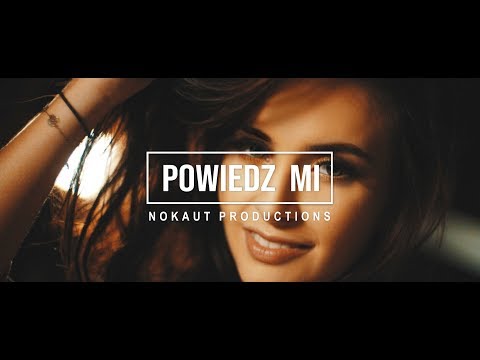
It's Getting Harder to Spot a Deep Fake Video - Duration: 2:59.
"We're entering an era in which our enemies can make anyone say anything at any point
in time."
Jordan Peele created this fake video of President Obama to demonstrate how easy it was to put
words in someone else's mouth-
moving forward we need to be more vigilant with what we trust from the internet.
not everyone bought it, but the technology behind it is rapidly improving, even as worries
increase about its potential for harm.
This is your Bloomberg QuickTake on Fake Videos.
Deep fakes, or realistic-looking fake videos and audio, gained popularity as a means of
adding famous actresses into porn scenes.
Despite bans on major websites, they remain easy to make and find.
They're named for the deep-learning AI algorithms that make them possible.
Input real audio or video of a specific person- the more, the better- and the software tries
to recognize patterns in speech and movement.
Introduce a new element like someone else's face or voice, and a deep fake is born.
Jeremy Kahn: It's actually extremely easy to make one of these things… there was just
some breakthroughs from academic researchers who work with this particular kind of machine
learning in the past few weeks, which would drastically reduce the amount of video you
need actually to create one of these.
Programs like FakeApp, the most popular one for making deep fakes, need dozens of hours
of human assistance to create a video that looks like this rather than this, but that's
changing.
In September researchers at Carnegie-Mellon revealed unsupervised software that accurately
reproduced not just facial features, but changing weather patterns and flowers in bloom as well.
But with increasing capability comes increasing concern.
You know, this is kind of fake news on steroids potentially.
We do not know of a case yet where someone has tried to use this to perpetrate a kind
of fraud or an information warfare campaign, or for that matter, to really damage someone's
reputation// but it's the danger that everyone is really afraid of.
In a world where fakes are easy to create- authenticity also becomes easier to deny.
People caught doing genuinely objectionable things could claim evidence against them is
bogus.
Fake videos are also difficult to detect, though researchers and the US Department of
Defense, in particular, have said they're working on ways to counter them.
Deep Fakes do however have some positive potential- take CereProc, who creates digital voices
for people who lose theirs from disease…
There are also applications that could be considered more value-neutral, like the many,
many deep fakes that exist solely to turn as many movies as possible into Nicolas Cage
movies.
Không có nhận xét nào:
Đăng nhận xét