Chủ Nhật, 5 tháng 3, 2017

Waching daily Mar 5 2017

[Lalay Kids Tv]

[Music begins to play]

Let's count monkeys!

One monkey

2 monkeys

3 monkeys

Four monkeys

Four monkeys!

Let's count them again.

One

Two

Three

Four

Four monkeys!

Let's count eggs!

One egg

Two eggs

Three eggs

Four eggs

Four eggs!

Let's count them again.

One

Two

Three

Four

Four eggs!

Let's count bananas!

One banana

Two bananas

Three bananas

Four bananas

Four bananas!

Let's count them again!

One

Two

Three

Four

Four bananas!

[Cheering]

Great job!

That was fantastic counting!

See you next time!

Thanks for watching! Don't forget to like, subscribe, and share!

For more infomation >> Numbers Counting - Counting 1234 - Counting For Children - Count Numbers - Duration: 1:51.

-------------------------------------------

Opel Agila / Suzuki Splash 🚗 Reset InSP - Duration: 1:24.

For more infomation >> Opel Agila / Suzuki Splash 🚗 Reset InSP - Duration: 1:24.

-------------------------------------------

DVA5 - Comment ajouter une galerie photo dans WordPress 🗻🏘🌠 - Duration: 5:11.

For more infomation >> DVA5 - Comment ajouter une galerie photo dans WordPress 🗻🏘🌠 - Duration: 5:11.

-------------------------------------------

American Tries To Speak PLATTDEUTSCH (LOW GERMAN) - Duration: 6:42.

Moin! Wo geiht't? Wo heetst du? Sounds like German, but not quite? Yep, that was my best

attempt at a greeting in Plattdeutsch. What is Plattdeutsch and let's try a few more phrases!

Hey everyone! I'm Dana and you're watched Wanted Adventure Living Abroad.

Plattdeutsch also known as Niederdeutsch in German and Plattdüütsch, Nedderdüütsch,

Platduuts, or Nedderduuts in Plattdeutsch, is called Low German or Low Saxon in English.

Yeah, I think that this dialect has more than enough names.

Plattdeutsch is spoken in northern Germany and also parts of the Netherlands. Nowadays

it is "just" a dialect, but back in the Middle Ages Plattdeutsch was the main language in

northern Germany and the language spoken by the Hanseatic League.

There are lots of differences between Low German and Standard German: grammar, pronunciation,

spelling, whole words even. Some things in Low German are actually more like English

or Dutch than Standard German. For example in German you say Schiff while in English

and Plattdeutsch it ends with a p: Schipp. Essen in German, to eat in English, and eten

in Low German.

And today I've got a few phrases that I'm going to try out in Plattdeutsch. I'm gonna

do my best and I'm going to say first the English, then the phrase in Standard German,

and then the phrase in Low German.

Where are you from? Woher kommst du? Wonääm kümmst du vun af? No that was terrible! Wonääm

kümmst du vun af? I can do it better if I'm reading it. Can I read it? - No. - I can't read it?

No. - Wonääm kümmst du vun af? Wonään... Wonään...it ends with an M. Wonääm. - Kümmst du.

Kümmst du. - Not kommst. - Yeah, it's different. Woher kommst du? Wonääm kümmst

du? Wonääm kümmst du vun af? I think I kind of got it there!

Nice to meet you! Schön dich kennenzulernen. Schöön, di kennen to lehrn. So here the most thing

that I find different is instead of in German schön dich kennenzulernen, in Plattdeutsch

it's schöön di...kennenzulernen. But the rest sounds really similar. I think. Schöön,

di kennen to lernen. So the schön is different too. It's like schöön. Schöön, di kennen

zu lehrn. Schöön, di kennen to lernen. No, no! Lehrn, lehrn just lehrn. It's so hard

because it's burned into my brain lernen. Hey, schöön, di kennen to lehrn.

I think that was pretty good! I even got the handshake in. I can combine this with moin! Moin, schöön,

di kennen to lehrn! And what was the other phrase that I learned? Building blocks, okay.

Wonääm kümmst du vun af? Moin! Schöön, di kennen to lehrn. Wo...nääm kümmst du

vun af? Moin! Schöön, di kennen zu lernen. No! That was German mixed with Plattdeutsch.

Moin! Schöön, di kennen to lehrn. Wonääm kümmst du vun af? I think that was pretty

good. I did three things. But I already knew moin before that. So I did new things just now.

Okay. Moving on.

So with this one, we don't really have just one standard English expression. I would just

say something like: enjoy! Or maybe: enjoy your meal!

In German: Guten Appetit! Laat di dat lecker smecken! Laat di dat lecker smecken! Let that

to you good taste. Yeah. Laat di dat lecker smecken! Let that to you, no, let to you that.

Yeah. Laat di dat lecker smecken! Let to you that delicious taste.

This one's important when you're learning a new language.

Please speak slower.

Bitte langsamer sprechen.

This one looks really hard. I'm even afraid to try. Snack maal 'n bäten suutje. It's

the last word that I'm really having trouble with. S-U-U-T-J-E. Snack maal 'n bäten suutje.

No, that's definitely not it. I don't know how to say it, but I know that whatever I

just said was definitely not it. Snack maal 'n bäten suutje. I'm pretty sure that wasn't

it, but I think that's the best that I'm gonna be able to get it.

I really love how this one sounds and looks in Plattdeutsch. Okay, I'm gonna try my best.

So in English it is: excuse me! Entschuldigung! Nähm dat man nich för ungood!

So I really like how this one looks because it looks like it's, like, don't take that

for un-good. You know? Like it looks like you're literally telling someone, if you bump

into them, like, don't take that for un-good, you know? Don't take that as, like, a not

good thing. I really, really like how this one looks. Walking through the store. And

I bump into someone and I'm like: oh! Nähm dat man nich för ungood! That's a long thing

to say when you bump into someone.

Very important one now: Where's the restroom? Wo ist die Toilette?

Wonääm is dat Paddemang? I think that was it. Wonääm ist das...nein! Not "ist das."

I switched back into German. Wonääm is dat Paddemang? I think that's pretty good. I'm

pretty happy with that one. I'm sorry! Es tut mir leid! Deit mi Leed.

That one wasn't so bad. Deit mi Leed. Ah, I think, I think, I think, I think I got that one right.

So I can say "I'm sorry" pretty okay, I would say. And also "where is the restroom?"

That's good.

And last one: I don't speak Low German well. Very meaningful, right? This is an important

one to be able to say. All these other ones that I've been doing I've had to act it out.

You know like, where is the restroom? And oh, excuse me! I've had to act it out. This

one I don't need to act. This is just the truth.

Ich spreche Plattdeutsch nicht gut.

Ik snack nich goot Platt. Really not. Definitely not. I think I said that as well as I can.

So my question for you is: How did I do? Okay, I know I probably did pretty bad? But I tried

my best. And what experiences have you had with dialects or less common languages in

a country? Please let me know in the comments below.

Thanks so much for watching! I really hope that you enjoyed this video and also I hope

you'll enjoy the bloopers that are coming up next. Until next time, auf Wiedersehen!

I did it! I think I said as good as I possibly can I don't speak Plattdeutsch very well.

I did just hit myself in the head while I waved. I waved and hit myself in the head.

Paddemang. Paddemang. Paddemang. Paddemang. I really like this word. Laat di dat...

Maybe I should have started with an easier one. Moin! Schön di kennen...Moin.

For more infomation >> American Tries To Speak PLATTDEUTSCH (LOW GERMAN) - Duration: 6:42.

-------------------------------------------

SO GEWINNST DU JEDE RUNE SKYWARS! - Duration: 9:01.

Welcome

For more infomation >> SO GEWINNST DU JEDE RUNE SKYWARS! - Duration: 9:01.

-------------------------------------------

В "Минуте Славы" танцор ответил на оскорбления Литвиновой - Duration: 1:48.

For more infomation >> В "Минуте Славы" танцор ответил на оскорбления Литвиновой - Duration: 1:48.

-------------------------------------------

たとえ落ち込んでいても…「机の下を見たらこうだから癒される」(笑) - Duration: 1:49.

For more infomation >> たとえ落ち込んでいても…「机の下を見たらこうだから癒される」(笑) - Duration: 1:49.

-------------------------------------------

Colors Game for Kids Talking Tom Gold Run #39 Gameplay vs Frosty Tom - Duration: 15:05.

Colors Game for Kids Talking Tom Gold Run #39 Gameplay vs Frosty Tom

Talking Tom Gold Run - New World Map Hank on Hawaii - Neon Lights and City Sights Character Unlocked,Talking,Gold,Run,New,World,Map,Hank,on,Hawaii,Tom,Neon,Lights,City,Sights,Character,Unlocked,Talking Tom Gold Run,Talking Tom,New World Map Hank on Hawaii,Hank on Hawaii,World Map Hank on Hawaii,Neon Lights and City Sights,Character Unlocked,New World Map Hank on Hawaii - Neon Lights and City Sights Character Unlocked,New World Map,Colors Game for Kids,Colors,vs Frosty Tom

For more infomation >> Colors Game for Kids Talking Tom Gold Run #39 Gameplay vs Frosty Tom - Duration: 15:05.

-------------------------------------------

_PN crazy สร้างการ์ตูนโลมาสมาร์ท - Duration: 15:20.

For more infomation >> _PN crazy สร้างการ์ตูนโลมาสมาร์ท - Duration: 15:20.

-------------------------------------------

WHOLE HEAP A STORIES. Episode 2: Leroy "Horsemouth" Wallace. - Duration: 4:55.

For more infomation >> WHOLE HEAP A STORIES. Episode 2: Leroy "Horsemouth" Wallace. - Duration: 4:55.

-------------------------------------------

This Week at UBC - March 5 - March 11, 2017 - Duration: 1:07.

Hi and welcome to This Week at UBC.

This week is Pride Week.

Organized by the UBC Pride Collective, students will be hosting a series of events including

the Queer U mini-conference.

YWiB is celebrating International Women's Day with Powerful Voices.

With speakers from companies like Lululemon and Cactus Club, this TED Talks style event

will show you the journeys of some very successful women in business.

Get your 2017 race season up and running with the UBC Triathlon Duathlon, one of BC's largest

and longest running triathlons.

Come out and participate or cheer on your friends this Saturday.

It's a Student Master Class with Professor Homa Hoodfar.

Professor Hoodfar will be exploring why academic freedom remains so important in modern society.

Join One Day @ UBC for a single-day course on producing food in a more sustainable manner

while providing livelihoods for farmers and more accessible foods for consumers.

Well, that's it for this week.

For more events, check events.ubc.ca

See you next week.

For more infomation >> This Week at UBC - March 5 - March 11, 2017 - Duration: 1:07.

-------------------------------------------

荒廃未来探索記【Fallout 3】しよけんプレイ Part11その18 - Duration: 8:18.

Fallout 3 Part11-18

For more infomation >> 荒廃未来探索記【Fallout 3】しよけんプレイ Part11その18 - Duration: 8:18.

-------------------------------------------

ОЧЕРЕДНОЙ ФЕЙК: ПЕРЕНОС БОЯ НУРМАГОМЕДОВ-ФЕРГЮСОН! (05.03.2017) - Duration: 1:39.

For more infomation >> ОЧЕРЕДНОЙ ФЕЙК: ПЕРЕНОС БОЯ НУРМАГОМЕДОВ-ФЕРГЮСОН! (05.03.2017) - Duration: 1:39.

-------------------------------------------

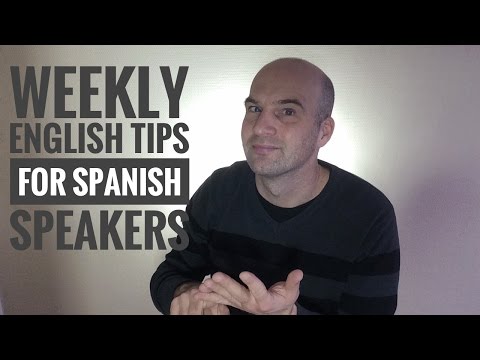
Learn English - Weekly Tips for Spanish Speakers - Ten Everyday Situations (with subtitles) - Duration: 9:28.

Hello everyone, and welcome back to

'English Tips for Spanish Speakers'.

Normally I present to you, each week, one

English mistake that Spanish speakers

make when they're learning English, and I

give you tips on how to get past

that mistake. This week I'm going to do

things a little bit different. This week

I'm going to present to you ten everyday

English situations, and teach you how to

handle yourself in those situations, give

you the right phrases, etc. Let's get

started.

I thought it would be best if I

presented to you a list of the ten

everyday situations, and then you can

look at them and then you can try to

decide yourself how you would handle it.

Then I will talk about each one and

you can see how you did after that.

Here is the list here.

Just one other quick thing -- you will probably have to

pause the video and think about each

answer individually.

I just want to say from the start

that 'How are you?' is a very good and

acceptable way to say something. It's

a good fallback. You can always say 'How

are you?' in every situation and, actually,

you have to use it -- I think -- in very

formal situations and that situation

where you don't know somebody so well.

That being said I actually don't say 'How

are you?' very often in my life because

i'm not often in those situations.

I say these other phrases, and I've made a list for

you in the slide that follow this

section. I divided them into two

parts: there's the questions that start

with 'how' and the questions that start with

'what'. They have different answers which

I'll talk about in the section that

follows the slide. The 'how' questions

are: 'How are you doing?'

(that's very common), 'How's everything going?'

(that's also very common),

'How's it going?' (that's probably the one I

say the most) and 'How are things going?'

Then the 'what' section:

'What's up?' (that's actually very common as

well), 'What's going on?' and 'What have you

been up to?'

Ok, so the textbook answer to 'How are you?'

in every textbook around the world

is 'I'm fine, thank you...and you?' Again,

it's a very acceptable answer. It's a

good fallback answer. In reality, we

don't actually say that very much. We

answer in many different ways. If

you're doing very well you could say

'Great, actually. How about you?' Two

things with this: The word 'actually' is

a great word that you should really

get into your vocabulary -- we say it all

the time -- and notice I said 'How about you?'...

so I deflect the question back to you.

That's a very important skill. You

could also say 'Not bad. How's it going

with you?', and that's probably the one I say

the most because it's pretty neutral - you're not doing fantastic, you're not doing

bad, so not bad. Then, again, I reflect the

question back to you. If you're doing

a little bit negative you could say 'It

could be better, I guess.

How are you doing? -- again, reflecting

the question. If you're doing

terrible --

and if you're speaking to the right

person -- you can say 'Awful, actually. It's

been a rough week.

How are you?' Again, I reflect the

question back to you.

Ok, so those are the 'how' questions,

right? With the 'what' questions it's

exactly pretty easy. If you say...if I say

to you...if you said to me 'What's up? I

could say 'Not much. What's up with you?'

'Not much' is a very good answer to the

'what' questions.

The standard response to 'Thank you' is,

of course, 'You're welcome'...and this is a

very good response and you can use it in

any situation, and I do use it quite a

lot. I think I more often say 'No

problem.'

That's a good response to 'Thank you.'

You might have learned that you could

say 'My pleasure.' This is ok, but it's

a little bit too much and a little bit

too formal, and I wouldn't use it very

much.

A few

responses to I'm sorry: Again, I think it

depends on the level of the apology.

If somebody's just a little bit sorry

about something you could say 'Don't

worry about it.' or 'It's ok, it' s no problem.'

That might be a good response. If

it's a huge apology and it really

affects your life, and the person says 'I'm

really, really sorry.,'

you could say 'Apology accepted.'

This one is actually the easiest of

the bunch. Let's say you ask me, 'Can

you hand me the marker?' I would say

one of two things:

'Here you go.' or 'Here you are.' 'Here

you go.' 'Here you are.'

That's about it.

I've just cooked a dinner and I have

friends and family around, and I want

them to start eating because they're

waiting patiently and politely. I think

what I would say in an informal situation

is 'Dig in.' --

so just start eating. I could also

say, for example, 'Help yourself.' --

so just start eating, basically.

In this familiar phrase that's used in

many languages around the world, if you

want people to enjoy the food in English

then we usually use the French. You

would say 'Bon appetit.' If you don't

want to use that foreign language, then you

could say 'Enjoy your meal.'

I'm introduced to somebody, let's say

someone says 'This is Timo.' and I would

say 'Nice to meet you.' Then Timo would

say to me back,

'Nice to meet you, too.' It's always good

to say 'Nice to meet you, too.' You

shouldn't hesitate to do that.

I just wanted to talk a little bit

about a mistake I hear a lot. The

first time you meet somebody you say

'Nice to meet you.' but that's the only

time you ever say 'Nice to meet you.' to

somebody. After that, you say 'Nice to

see you.' or 'Nice to see you again.'

It's very common in English to

say 'Have a nice day.' and the proper

response to that is 'Same to you.' or

just 'You too.' and this applies for many

situations.

'Merry Christmas.' 'Same to you.' 'You too.'

'Happy New Year.' 'Same to you.'

'You too.'

Yeah, so 'good-bye' is a very standard

response. It's a very good response and

you can fall back on it.

However, it's the same kind of thing as these

other things. We don't actually say

that that often. I will give you some

examples of other things you might say.

You could say just 'bye'. You could say

'bye-bye'.

You could say 'See you later.' -- and I think

that's the thing I probably say the most. You

could say 'Take care.' and 'Take care' is

very nice. It's...it's not overdoing it and it's

kind of a kind way to say 'good-bye.'

You could say 'So long' which is something

I also say a lot. You could say -- to be

totally informal - 'Have a good one.'

That might be the informal one you might

have in your arsenal.

That's it. I hope you liked the video.

If you did, please click on the thumbs up

below...and also please consider sharing

it with others who might find this

useful. Also, I hope you'll consider

subscribing to my channel as these videos

come out every week like clockwork.

I think it's a very good idea. Very

importantly, I have a website called

'English Tips for Spanish Speakers' and I

can really use your help and your

feedback and your advice to kind of keep

that project going.

You can follow the link at the end of

this video or click on the link in the

description box below, and you'll get

there. Next, I have a course called '50

Common English Mistakes' on a site called

Udemy, and if you follow the link in the

description box below you'll get half

off the course...it'll cost about 10 euros

or ten dollars.

Finally, I have a Twitter feed, and my

twitter handle is @epicenglishtips so

i hope you will follow me on Twitter.

That's it. Thank you for watching, and

I hope to see you next week.

Không có nhận xét nào:

Đăng nhận xét