Welcome back to the Gentleman's Gazette!
In today's video, we discuss shirt styles such as the collar, the placket, the fit,
and anything else that goes into a shirt.
With the
recent popularity of made to measure shirts and custom shirts online and offline, you
get lots of options.
Now that can be a blessing or a curse, depending on what you need and what you don't.
First of all, a shirt has to fit properly and oftentimes, you're confronted with different
terms such as classic fit, standard fit, slim fit, trim fit, modern fit, so what exactly
does that mean?
First of all, the shirts that your father or grandfather wore was probably a classic
fit.
The primary goal of the classic fit is comfort so you'll have more space in the chest, you'll
have wider sleeves.
Overall, it's a roomier cut with excess fabric.
The idea is that it gives you mobility but when you tuck in your shirt, you have some
hang over.
It's not the most attractive of styles.
For that reason, it's not very popular with modern young men who want a more trim silhouette.
In response to that, the so-called slim fit was created.
Basically, everything on the shirt is slimmed down.
The torso is slimmed down sometimes with the use of darts in the back.
The chest is smaller, the shoulder width is smaller, and oftentimes, also the sleeves
are much slimmer.
The problem encountered with slim fit shirts is oftentimes just everything is made slimmer
without giving thought to mobility.
For example, if your shirts are too slim, you can't actually move anymore and actually
constricts your movement.
That's actually terrible and even in a slim fit shirt, you should still be able to move
around freely.
Therefore, the modern fit or contemporary fit was introduced which is somewhere between
the classic fit and the slim fit.
It usually features a slightly tapered silhouette, sometimes has darts, sometimes not.
It is an attractive look but it doesn't compromise comfort and mobility.
Personally, this modern contemporary fit is my favorite because it combines the best of
both worlds.
Now sometimes, you may also come across something called the super skinny fit and that just
means that everything is tight.
The problem is that it's so tight that you easily get wrinkles all over the place and
it's not just uncomfortable but it also looks bad and you should avoid it at all costs.
Once you've determined what fit is right for you, it's time to choose the details in the
shirt.
First of all, let's look at the placket styles.
The placket is the material on a shirt front that's underneath the buttons.
Right here, you can see the so-called traditional front placket which is an additional piece
of fabric strip that is sewn onto the top.
It creates great symmetry, it's therefore very popular for a classic shirt.
It's also called American placket and it's definitely the most conventional style so
even on less expensive dress shirts, this is probably what you'll encounter at least
in the US.
The other very popular placket style is the so called French placket as you can see here
on a checked shirt.
Unlike the Amercian placket, it's simply a flat, smooth edge that's folded over and sewn.
Once buttoned, it creates a clean, nice silhouette and personally, I like it a lot.
For summer shirts or pop-over shirts, you'll often encounter the 3/4 placket which means
the placket doesn't go all the way down and it's more like a polo shirt, just very deep.
You have to pop them over your head to put them on therefore, they're merely good for
casual, outside events or the beach.
Another placket style you usually see in evening wear is the fly front placket.
It's called that way because the buttons are hidden with an additional piece of fabric
and personally, I don't like it at all.
When I wear a tuxedo, I use shirt studs because they're decorative.
For dress shirts, I wear a traditional placket or French placket.
Some people like that hidden fly placket, if you do, you can wear it otherwise, I suggest
stay clear and go with classic options like French or American placket.
Next up, let's discuss collars because the collar is probably the most visible part of
the shirt especially if you wear jackets.
The purpose of the shirt collar is to flatter your face.
In order to do so, it has to be in harmony with the V-line created by your jacket and
the upside down V created by your collar.
Ideally, if you have an oval face, you want something that's slightly more spread to balance
it out.
If you have an oval face and you take a collar that's very pointed down, you just elongate
the loook of your face and it's not flattering anymore.
On the other hand, if you have a quite round face or horizontal face and you use a widespread
collar, the width of your face is even more accentuated.
In those cases, you should choose a collar with points that face more down.
Probably one of the most popular collars today is the spread collar.
It's called that way because it has a certain spread and it's used for dress shirts and
casual shirts alike.
It works with or without a tie and it's quite versatile unless you have a very wide face.
In that case, I would stay clear of them.
The other popular collar style seen today especially in the US is the so-called button
down collar.
It's particularly popular for the oxford cloth button down collar shirt.
If you want to learn more about this specific style, please check out our in-depth guide
here.
The hallmark of a good button-down collar is that so-called collar roll or the S-curve
which is achieved by having extra material between the button and the top of your collar
and it just creates a nice curve roll.
Apart from the classic button-down collar, you can now find the so-called under button-down
collars.
There's simply a button placed underneath the collar so it's invisible.
It has the same function to keep your collar in place, at the same time, the collar can
be very soft and it looks like a regular collar and you have that added comfort.
The classic collar is called that way because that's probably what your grandpa wore.
It's a collar that is not too spread, tips are not too long but not too short and overall,
it's a very unexciting collar but it works well with a four-in-hand tie knot.
To learn how to tie this knot, please check out our video here.
In recent years, smaller collars have become very popular but most of the time, they're
not very flattering especially if you wear a tie or a bow tie, it simply looks like a
child collar or like a shirt that was handed down to you from your older brother.
If you really want to, you can wear a small collar with denim shirts or casual pants like
khakis but please do not wear it with a suit or any form of neckwear.
For evening wear such as white tie tailcoat and tuxedo, men would traditionally wear a
detachable wing collar as you can see here.
Now, that's a rather stiff collar and it's hard to find these shirts anymore today because
it's a separate piece and the idea was that you were able to wash it separately but today,
most men find it to be a lot more complicated.
As a consequence, shirts with this kind of collar usually come with an attached collar
or most of the time, men actually prefer a softer collar with their tuxedo because that's
what the Duke of Windsor introduced in the 30's.
He wanted everything to be soft therefore, with tuxedos today, it' perfectly accurate
to wear a turndown collar shirt in white that is a soft collar and you don't have to go
with those attachable ones.
Another collar that's not very popular in the Western hemisphere is the so-called mao
collar.
It's simply a short, stand up collar.
It's very easy to tailor and it's sometimes worn in combination with the Nehru jacket.
To learn more about the jacket, you can check out this guide.
Overall, I really dislike the look of the mao collar.
If you like the style, go for it.
Another collar that I like a lot is the so-called club collar.
It has rounded ends so you're not going to have a collar tip but they're just rounded.
If you like to wear collar bars, you want this club collar with a pinhole so you can
actually wear it comfortably and it elevates your tie knot.
It creates a really debonair look.
To learn more about collar pins and clips, and bars, please check out this video here.
Another collar I'm quite fond of is the medium spread collar , which I'm wearing here right
now.
It's basically not classic but not too spread.
It's kind of in between.
I chose to go with rather long points simply for a different look.
Not all medium spread collar have points that are long but the advantage of going with a
made to measure shirt is that you can really choose and design your very own collars according
to your very own wishes and design ideas.
A collar that was quite popular in the 90's, you saw it in movies like Wall Street, was
the so-called tab collar.
The little tabs on the collar elevate your tie in a similar fashion to a collar clip.
A very popular style lately has been the so-called extreme cutaway collar.
Personally, I'm not a huge fan of it because it's just cut away so far, you cannot really
wear a neckwear that looks flattering.
Because of the widespread, your tie knot has to be extremely big or you see the band of
the tie and it just looks odd.
Maybe you can get away by tying a double Windsor and you can learn in this video how to do
that.
Next up let's discuss shirt cuff styles.
The most traditional dress shirt cuffs are French cuffs or double cuffs.
They're folded over and fastened with cufflinks.
Today, most dress shirts come with so-called barrel cuffs or button cuffs and they feature
one, two, or three buttons.
One or two is more traditional, three is a little more contemporary.
A combination of those two styles is the so-called James Bond cuff because it is actually buttone
but folded over.
It's also known as the cocktail cuff.
Apart from that, you can have straight cut cuffs, or slightly angled ones, or rounded
ones, but apart from these three basic styles, there's not a whole lot of variety in that
department.
Personally, I think with a suit, a French cuff shirt with cuff links is better.
For a casual shirt, you can go with button cuffs.
Most traditional shirts have a hem that is longer in the front and at the back and cut
up in the middle so you don't have excess bunching of fabric.
You want your shirt to be much longer especially in the back because you don't want it to come
untucked.
If you want to wear your shirts casually and not tuck them in, go with a straight lined
hem because the long ends look unflattering if you don't tuck them in.
Okay, now let's take a look at the back of the shirts.
Traditionally, you can find a so-called split yoke in the back which originally was there
to compensate for sloping shoulders.
Today, it's simply a detail that helps in matching the patterns and the sleeves more
easily.
It doesn't really add value unless it's a true custom shirt where they adapt it to your
shoulders.
In terms of pleats, traditional shirts oftentimes feature a center pleat down the middle.
It's like a box pleat that gives you more room.
Alternatively, you can have these side pleats which give you a little more room when you
move your arms or sometimes there are no pleats at all.
Personally, I like the idea of greater mobility that's why I usually choose some side pleats
or no pleats at all.
I'm not a big fan of the box pleat because there's just too much fabric.
If you choose to go with a contrasting collar or contrasting cuffs, I suggest you stick
to white, it's very classic and it usually gives the shirt a more formal look.
If you want to learn more about shirt styles and shirts in general, check out our in-depth
guide on the website here.
To get videos like this right to your inbox, sign up for our free newsletter or subcribe
to our YouTube channel channel and hit that little bell icon, that way you're notified
everytime we have a new video coming out.

 For more infomation >> ESTAMOS FERRADOS!! - The Legend of Zelda: Twilight Princess HD #18 - Legendado PT-BR - Duration: 26:46.
  For more infomation >> Степени сравнения в испанском языке. - Duration: 3:40.
  For more infomation >> 【完整版】新年搶紅包! 藝人對賭大會!2017.01.27小明星大跟班 - Duration: 44:35.
  For more infomation >> FAQ : LEVONS LE MASQUE (erreurs, défauts, jeunesse, politique etc) - Duration: 11:49.
  For more infomation >> Top 8 des mots anglais d'origine française - Duration: 3:49.
 For more infomation >> Comment Flouter un visage et plaques d'immatriculation en mouvement - Duration: 3:09.
  For more infomation >> NICHT STEHEN BLEIBEN CHALLENGE | Hello Neighbour ALPHA 3 UPDATE (Deutsch/German) - Duration: 12:06.


 For more infomation >> Was ist die Zeit? - SETTIME! ⏰ - Duration: 4:25.
  For more infomation >> Как начать новую жизнь и изменить себя? 6 шагов, которые позволят начать жизнь с чистого листа - Duration: 3:58.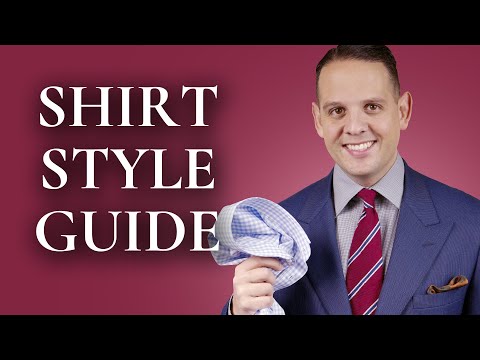
 For more infomation >> Fabric Haul: GET OUT OF MY STASH CHALLENGE #GetOutOfMyStash - Duration: 8:44.
  For more infomation >> WWE RAW Türkçe Altyazı | Dördüncü Kişi Kim? - Duration: 9:15.
Không có nhận xét nào:
Đăng nhận xét