Thứ Sáu, 24 tháng 8, 2018

Waching daily Aug 24 2018

Amazing Cake Decorating Tutorial

For more infomation >> Amazing Cake Decorating Tutorial 😘🍰 The Best Chocolate Cakes Decorating Videos 2018 - Duration: 10:38.

-------------------------------------------

Top 10 Video Games That Are Just Ads - Duration: 9:03.

Advergames were pretty popular during the 90's; these were games who were packaged

as a fun time, but whose sole purpose was to get you to purchase another product.

Generally in terms of form they would resemble other titles that were popular at the time,

giving their own capitalist take on side scrollers like Mario or top down RPGs like Pokemon.

And some of these titles are actually quite adored, despite their shameless pandering.

So today, we're taking a closer look at these games with our list of the top 10 video

games that are just ads!

10 Cool Spot (7-Up) Most advergames make use of their company's

mascot, typically as the game's protagonist.

So when 7-Up decided to release a game for the Sega Genesis and the Mega Drive, they

went with their brand's mascot, Cool Spot, as the playable character.

He's a red spot with sunglasses and hands and feet.

How charismatic.

A single player platformer (which is a bit of a trend with these 90s advergames, you'll

notice), Cool Spot runs, jumps and attacks enemies by throwing soda bubbles at them.

You need to collect spots as you progress, and if you collect enough you unlock a bonus

stage of that level.

You can also collect the letters to spell the world UNCOLA, which was 7-Up's slogan

at the time.

The best part was, this game actually got ported to a bunch of different systems, and

THEN it got a sequel, called Spot Goes to Hollywood, an isometric game that was horrifically

difficult to play, and was highly criticized for being highly monotonous.

9 World Gone Sour World Gone Sour is the most recent game on

our list; published in late 2011, this giant playable add for Sour Patch Kids candy puts

you in the gummy shoes (feet?) of a green Sour Patch Kid who wishes to be eaten after

he falls out of his package of Sour Patch Kids at the start of the game.

Aside from having a very masochist concept, the game has some serious little big Planet

vibes, and you can actually recruit other Sour Patch Kids to help you as you go.

It got mediocre reviews, with most people being frustrated that the cost of the game,

five dollars, wasn't worth how short the game was, and that despite having good mechanics,

grim humour and entertaining cut scenes, it really felt like a glorified commercial.

8 Kool-Aid Man Who doesn't want to run around as the Kool-Aid

Man and shout OH YEAAAAH at your screen while you do it?

Apparently Kool-Aid saw the potential there and crafted a game with Mattel for the Atari

2600 where you could do exactly that.

Well, sort of.

Initially only available through mail-order, the game didn't allow you to play as the

Kool-Aid Man at first.

Instead, you play as two children walking through a house (of an immense size may I

add) to find get to the Kool-Aid in order to drink it, all while avoiding touching enemies

who could move around through walls and floors.

And drinking the kool-aid wasn't all that rewarding.

Although, once you've completed your task and have consumed all the kool-aid in the

house, the Kool Aid Man who burst through a brick wall in all of his weird pixelated

glory.

ONLY THEN have you unlocked playing at the Kool-Aid Man, whose goal is to catch the flying

fruit passing through the house (which you're also able to pass through, making the house

a little irrelevant at that point in the game).

But hey, who said you have to put effort into crafting a video game?

7 Yo!

Noid The Noid is perhaps one of the weirdest food

mascots out there.

If you were alive back in 1987, you may remember that this strange little man creature character

was the mascot for Domino's Pizza, which used the tag line avoid the noid!

The noid was supposed to be a physical manifestation of all the challenges that come with getting

a pizza delivered in 30 minutes or less, apparently.

He would go out of his way to thwart your delivery, but always failed.

So playing this character who is fated to always be a failure is exactly what you'd

want from a video game, right?

At least on that intellectual level.

He ain't no Hamlet, that's for damn sure.

Anywho, Yo!

Noid was YET AGAIN another 2D platformer, and instead of being the bad guy, this time,

the mayor of New York City calls up the Noid to get him to stop his evil duplicate, and

in exchange his reward is a massive pizza.

The game, just like many others on this list, was pretty awful, but on the flip side (quite

literally) you got a one dollar Domino's coupon on the back cover of the instruction

manual.

6 Chester Cheetah: Too Cool to Fool Do you LOVE Cheetos?

Is Chester Cheetah YOUR IDOL?

DO YOU WANT TO COLLECT CHEETOS AND PLAY VIDEO GAMES?

THEN CHESTER CHEETAH TOO COOL TO FOOL IS THE GAME FOR YOU!

The slickest coolest cat with 'tude is who you control in this game.

Chester plays guitar!

Chester rhymes unnecessarily!

And Chester acts super-duper cool.

It's by no means a good game, but for those invested in the novelty or nostalgia, it's

entertaining in the least.

You also get to control Chester on a weird motorized skateboard at some points, too.

5 MC Kids It should be no surprise that in its history,

McDonalds at one point released an advergame.

Not that its ever really needed the promotional help, though, or at least back in 1992.

Initially made for the NES, you play as one of two children (or both in 2 player) who

venture into McDonaldland, a fantasy world in which they must return Ronald McDonald's

magical bag that was stolen by the Hamburglar.

Created by 4 people over the course of 8 months, it surprisingly received decent scores from

critics, with one critic from gamepro even stating that it had some great features that

Mario, which it was clearly inspired by, lacked.

4 America's Army It's not just blatant product placement

that advergames can be used for; video games have been used as a recruitment tool in the

past, too.

Such is the case with America's Army; a first person shooter game that was published

in 2002 by the US Army as a 'strategic communication device' that allowed players to experience

what being in the Army was like.

It was the first use of game technology that the US military had ever used, and it was

highly criticized by some to be propaganda for the army, despite also receiving really

strong reviews and awards for how well-crafted it was.

There have also been a handful of sequels, too.

https://en.wikipedia.org/wiki/America%27s_Army 3 Darkened Skye

Darkened Sky is an attempt at banking off of the fantasy RPG genre by crafting an advergame

that features some not so subtle product placement.

What product does it shamefully boast?

Skittles.

Yes, because seamlessly integrated skittles into an RPG quest is something that totally

works.

Essentially you collect Skittles in order to unlock your magical abilities.

It's painful.

The story follows a girl named Skye who is searching for her mother throughout a fantasy

realm, and apparently it's concept was inspired by the Skittles taste the rainbow commercials.

When the game was finished, Simon and Schuster, one of the companies behind it, considered

taking the skittles out of the game altogether, but it was so ingrained in the game's script

that they couldn't.

Despite this, they decided to not have any mention of skittles on the box art for the

game, which almost made it weirder for those purchasing it without having any idea that

it was a giant ad.

2 Sneak King (Burger King) Sneak King may not be the most diverse game

out there in theory, but in execution, it's absolutely hilarious.

You play the The King, Burger King's mascot, being the ULTIMATE SUPER CREEPY CREEP sneaking

around delivering unsuspecting hungry people food from Burger King, in a sort of spy versus

spy style game.

You fail if an NPC is alerted by your presence.

It's just too damn good.

And as much as we knock this game, it did serve its purpose; Burger King's sales increased

by 40% after the game was released.

It also sold millions of units despite receiving poor review from critics, but like, c'mon,

can you blame it for doing so well?

It's amazing.

1 Pepsiman Pepsiman is ridiculous.

So for context, back in the mid 90s, Pepsi created a mascot for it's Japanese corporate

branch that was designed by a Canadian comic book artist.

His whole schitck was to show up whenever someone was thirsty Pepsiman would appear

and give them a drink.

Despite being ever so slightly creepy and also a total rip off of the Silver Surfer,

Pepsiman would go on to get his own video game, having appeared in the arcade game Fighting

Vipers prior to his own title.

Each of the stages in the Pepsiman game had you controlling the hero, 'saving' a person

who was in need of a drink, dodging obstacles as you make your way to them, all to the constant

tune of PEPSI MAAAAN!

Also saving them means you run to a vending machine and drink a pepsi yourself.

Surprisingly, critics did hate it, although did comment on how weird and bizarre it was.

It also has a bizarre opening that implies that the entire game takes place inside of

a pepsi can that a dude gets from a vending machine and drinks most of before realizing

the Pepsi Man (and I suppose the whole digital world inside the can) exist.

And I duno about you guys, but that leaves me with a lot of questions about what that

dude just drank.

It also ends with the same man who had clearly consumed an unsafe amount of pepsi throughout

the duration of the game and its cut scenes.

There we have it friends!

Have you ever tried out any of these games or other advergames?

If so, what was your favourite?

And which ones did you totally despise?

Let us know in those comments below!

If you dug this video, hit that like button!

And don't forget to subscribe to top 10 gaming for all things video games, from lists

to news to updates and more!

Thanks for watching everybody!

Catch you all in the next one.

For more infomation >> Top 10 Video Games That Are Just Ads - Duration: 9:03.

-------------------------------------------

ANSC 207 Week 1, Video 1: Intro and taxonomy - Duration: 3:16.

Hello, and welcome to ANSC 207!

For our first lecture video, we will be discussing domestication of companion animals.

The learning objectives are a summary of the key concepts you should be familiar with after

a lesson.

These are topics that are very likely to reappear on exams, quizzes, projects, etc.

Use this list as a guide when developing study materials for yourself.

Our objectives for this week are: to learn the basics of the taxonomic classification

system, learn why different species were first domesticated, we want to find out the progenitor

species for the dog and cat, the criteria for domestication, the effects of domestication,

and the difference between domestication and taming.

Before we really dive in to this week's super cool topic of domestication, we need

to have a short discussion of taxonomy.

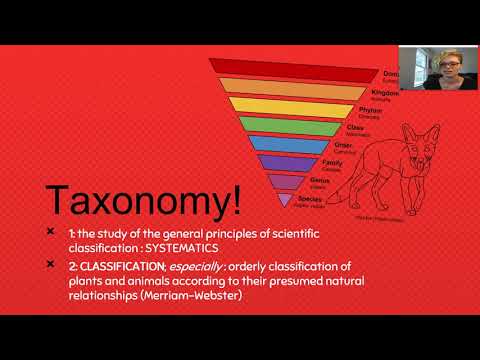
. Taxonomy, as defined by the Merriam Webster online dictionary, is the orderly classification

of plants and animals according to their presumed natural relationships.

Taxonomy is not an exact science by any means, and much argument exists in the field over

how to correctly classify living things.

Once based solely on behavioral and aesthetic similarities between different living organisms,

taxonomy is now employing the ability to sequence genomes and "decode" DNA in order to determine

relationships between species.

Essentially, the levels of classification start with very wide, sweeping categories.

The broadest category is domain, with each subsequent category becoming more and more

specific until it is narrowed down to a single species (and in some cases, subspecies, if

they exist).

So let's use the red fox as an example.

We go from the domain, Eukarya, which encompasses everything from plants to single celled organisms,

down to the kingdom Animalia, which narrows it down to animals.

Then we progress to the phylum chordata, which includes every animal with a backbone.Next

is the class mammalia, for mammal.

Then the order carnivora, for carnivore.

Then the order carnivora, for carnivore.

Foxes are in the canidae family along with wolves, coyotes, dogs, etc.

The genus Vulpes includes all the different kinds of foxes.

Then the species name, which also happens to be vulpes.

So the animal referred to as Vulpes vulpes is the red fox.

Taxonomic classifications help us make sense of the living things we share our world with.

Paired with taxonomic classification, familiarity with the domestication history of animals

will help us understand the foundations upon which our deeply ingrained bond with them

was forged over thousands of years.

You guys are going to watch a short video on taxonomy and then we will get back together

for another discussion.

For more infomation >> ANSC 207 Week 1, Video 1: Intro and taxonomy - Duration: 3:16.

-------------------------------------------

Hermosa Beach 3/3 Modern Luxury Home, Walk-thru video tour - Duration: 6:01.

This home has three bedrooms three and a half bathrooms with a two-car garage and

a small driveway for guest parking (where that black car is). It's a four

level home with three levels of interior living and the fourth level being the

rooftop patio which has an elevated 360-degree panoramic view. Notice all the

clean straight lines in the design. It is a modern luxury home and they've

incorporated a few predominant curves in the interior architectural design

that add a nice contemporary element and a very artistic focal point of the home

actually. You'll notice a front door surveillance camera here and there's a

built-in home audio system with speakers in the ceilings throughout the home.

As you walk in here, the first room on the left this is the main bedroom suite.

It's facing the ocean and has a very nice-sized balcony, tons of light coming

in and still great privacy with no houses across the street. In the

bathroom here there is a separate Jacuzzi tub, it's very nice, there's nice modern

windows here again allowing lots of light in and privacy with that design

style. Separate stand-up shower. I really like how they've got the shower and the

tub on opposite ends of the bathroom; I feel like that always makes the space

feel larger. Plenty of room here on the balcony for patio furniture and there's

a nice breeze always coming in from the ocean. The closet here is nice size and it

does have the built-in shelves making it very convenient. The home is actually

just over 2,000 square feet and the owners and architect have done a really

great job in the design to make it feel much larger. And here's the second

bedroom, it does have a nice closet and dresser space there, privacy shades on

the windows and it does have a full en suite bathroom tub and stand-up shower.

Just outside the door here, this is a linen closet on the right and then a

washer and dryer closet on the left. Let's go downstairs and take a look

at the third bedroom and the two-car garage.

Good space in the garage. There's some bicycle parking and storage shelves.

This third bedroom here could be used as a media room or a game room.

It looks like it was originally designed for that as it has a small

refrigerator, sink and some cabinetry. The space is good and

currently occupied as a bedroom which is great for a third bedroom. The bathroom

is not en suite however the entire downstairs is pretty private. There is

a sit down seat in that shower there's a stand-up shower with a sit-down seat and

we'll go take a look at that third floor now you'll notice the staircase here

gets wider as you go up and as you approach the third floor kind of a grand

entrance preparing you for the wide open space that the third floor is

is facing the ocean there are tons of light coming in and does have the solar

shades and the kitchen yeah kitchen wide open to the dining to the living area

nice architectural curve there in the ceiling lifting it higher very nice

design feature

modern designed fireplace there fits nicely out here on the balcony good

space for patio furniture just have a nice sized barbecue grill as well gas

hooked up and that is facing the ocean there and good 180 degree actually over

180 degree views here and that is pure Avenue just a half a block away there

and of course most of Hermosa Beach is dining and entertainment restaurants

nightlife are all right there a block away nice little office space a little

work nook there some shells built-in appliances throughout the kitchen great

space here in the kitchen let's have that frameless corner window

there it's nice brings a lot of light in

notice the bar top there is curved as well kind of matches that stairwell

curved design and then a convenient half bathroom here on the third floor I'll go

take a look at the rooftop patio see most of the neighbors have a similar

modern design rooftop patios this one here sits a little higher and this has

360-degree views you can see out to Catalina Island

all of Hermosa Beach pier Avenue the Hermosa piers right over there

natural gas line here in the fire pit plenty of patio space exceptional views

very nice house here in Hermosa Beach

you

For more infomation >> Hermosa Beach 3/3 Modern Luxury Home, Walk-thru video tour - Duration: 6:01.

-------------------------------------------

Video Tour of Supervision - Duration: 5:41.

Hello everybody. This is a short video tour of your Supervision course in Canvas.

I want to share my screen with you

so you can see what I'm looking at.

This is what your course will look like when you

open up

Supervision in Canvas, and you'll notice I've given you three things to go ahead and do to get started.

First of all purchase your textbook and I'm going to

talk more about the textbook here in just a minute. Read your syllabus. You'll notice there's a link here to the syllabus.

Click it. Open it up and read it

so you'll know what you're responsible for this semester and how you're grade is going to be calculated.

Also notice I've made a link here and this link is to the syllabus

verification form and

it just basically asked you if you've read the syllabus and you select yes or no.

And if you select yes, I'll give you a few extra points on your first assignment.

So definitely do that.

And then number three begin your first assignment and I'll show you where to find all your assignments here in just a minute.

Everything basically you need this semester you can find under Syllabus. So if you click Syllabus,

you'll see I have entries from

the first day of class all the way to the final exam.

So if you click on Class Begins Today,

it'll come up and tell you what you need to do to get started.

And then if you click on Instructions - Week 1

it tells you we're going to read chapter one this week. You can download my notes if you want to.

We're going to read Incident 1-1 and post to the discussion for that incident.

So just a short little case and you're going to do that by September 2nd, so you got this weekend and next week

to work on

reading that and making your post.

And then you're going to download the personal interest inventory, which is on the self assessment

exercises page and

fill that out and put it in a notebook for me. So I will always put your instructions for each week out on

the syllabus page.

You'll notice that next week's instructions are Instructions - Week 2.

So I have them set up all the way through on the Syllabus page which comes over to the calendar here.

So you're able to see everything that you're going to be responsible for.

You can click back on supervision and get back to

the syllabus page.

You can also go to assignments and you can see that you have your assignments listed there.

It'll show you when they become available when they're due.

So as it's Incident 1-1 is due on September 2nd and you're able to get into it. It shows you when your exams are,

when your notebook is due that sort of thing. I also put a lot of announcements out here during the semester

so now you'll notice that

written a couple of things to you. Just click on it like first week instructions and it tells you what to do

but I always put things out here like if we're having meetings on campus or

deadlines for assignments or tests or things I'm trying to remind you of so check announcements all the time.

Pages if you click on View all pages, you'll see I have chapter notes out there for you.

You can download the chapter notes, print them out,

take notes on them

or in your book.

The exam reviews are all out there

so you're able to to download the exam review and open it up and it tells you what to study

for your first exam--you will have all those out there.

My information (Instructor Information) is out there on Pages, View all pages.

Recommended software

which we really don't have any for this class.

The self-assessment exercises are all out there so you can download each of those whenever they're assigned

and fill those out. And then textbook information is out there as well.

Okay, so Pages, View all pages has a lot of different stuff in it.

Probably most important to you might be the chapter notes. It might be very helpful to download those and print them out.

People has everybody in the class and of course you can always click on me D Ferguson if you want to

click on my name and then send me a message. So send message.

Grades all your grades will be available

the whole semester long. You'll be able to see your scores as they come in.

So they'll give you a running total and you'll never have to really wonder about your grade. But if you

do have questions about your grade, just feel free to email me or call me.

So this is basically an overview of the course to help you figure out how to navigate this

Canvas course and if you need anything at all

you know you can always

email me inside Canvas

or you can call me and I've got my phone number right here on the main page if you need to leave a

message if you need to. I hope you all have a good semester and

if you need anything, let me know.

For more infomation >> Video Tour of Supervision - Duration: 5:41.

-------------------------------------------

ANSC 207 Week 1, Video 2 nomenclature, criteria for and theories behind domestication - Duration: 6:21.

The scientific name of any species of organism has at least two, sometimes three, parts.

We will use dogs as an example.

Whenever you use the scientific name of a species, you need to follow some formatting

conventions.

First, the name must be italicized.Then, it must be written in the correct order.

We start with the genus, in this case, Canis.

The genus name is capitalized.

Then we list the species name, lupus.

This word is not capitalized.

If the animal is a subspecies, there will be a third word.

This is the specific epithet which lets you know this animal has a slight distinction

from the rest of its species.

Dogs are widely considered to be a subspecies of wolves (although, as with everything in

taxonomy, there is debate around this classification).

So when we put the whole name together, we have Canis lupus familiaris!

What about our kitties?

So, for cats, we're going to start with the Genus, which in this case would be Felis.

Next, would be the species name, silvestris.

And the specific epithet, or subspecies, catus.

So when we put it all together, we have: Felis silvestris catus.

Each companion animal species has its own taxonomic classifications as well as a specific

domestication story.

Guinea pigs descend from either Brazilian guinea pigs or Montane guinea pigs (or possibly

both).

They were originally bred for meat.

They are still consumed regularly in parts of South America where they were originally

domesticated 5-7,000 years ago.

As you can see, domesticated guinea pigs are considered different enough from their ancestors

to be considered their own species.

Rabbits are believed to have first been domesticated in monasteries as a food source.

They were decreed a form of fish.

So, people were allowed to eat them during Lent.

Therefore, monks kept them around in monasteries so that they could have some non-fish fish

to have during Lent.

While they have become more popular as pets, you can still buy rabbit meat and fur here

in the U.S. Rabbits were domesticated a mere 1,500 years ago, and the domestic rabbit is

not even considered its own subspecies.

It still shares the same species name as its progenitor.

While domestication was a unique, nuanced process for each species involved, two generalizations

can be made about how the process was started.

Human-mediated domestication theory is the theory of domestication where animals were

selected by humans to be more docile and useful.

Self domestication is the theory of domestication where animals took charge of the domestication

process, with the animals who could exist near people being the ones most likely to

reproduce.

Both versions likely played a role for each domesticated species to some degree, but most

animals are thought to have begun the domestication process themselves.

Humans then began mediating the later stages of domestication by actively selecting individuals

to breed together.

So since animals are so beneficial to us, then why have relatively few species been

domesticated?

Well, domestication is a long, drawn out process, requiring humans and animals to be in close

proximity for long periods of time before animals truly become domesticated.

Therefore, wild animal species possessing traits conducive to being kept in captivity

are much easier to domesticate.

Species which live in large, stable groups with flexible social hierarchies are generally

easier to keep in captivity because they would have stuck close to their family group.

They feel comfortable being in very close proximity to their herd at all times, so they

can be kept in pens together.

Humans would also be able to infiltrate the social hierarchy and seen as one of the group.Short

generation times are in relation to the human lifespan.

Animals that reach maturity quickly can be produced faster, and it is easier to keep

track of their breeding.

Animals like elephants, which can take up to 15 years to reach maturity, mean people

could not easily breed a lot of them in their own lifetime.

A calm disposition was critical.

Along with being incredibly adept at escaping, gazelle and antelope will panic easily.

Even if they could not manage to jump out of their enclosure, they could run headlong

into a fence.

Their flighty nature made it difficult for people to hang onto them for any amount of

time.Being a fussy eater makes an animal much harder to domesticate.

In order for animals to become domesticated, their food has to be easy enough for the average

person to find.

If you can think of a panda, you're not going to be able to find bamboo nearly anywhere

all over the world like you would be able to find grass for a cow.They must mate readily

in captivity.

Egyptians attempted to domesticate cheetahs as hunting partners, but they failed because

the cheetah cannot breed in captivity.

Their elaborate mating ritual requires the male to chase the female for days over great

distances before she will allow him to mate.

This ensures that she has a prime physical specimen as a mate, but it also ensures they

are impossible to domesticate.

And until now, the animal had to be useful.

Leisure time and excess income is fairly new to humans, and until now, only the richest

people could afford pets purely for leisure.

So if an animal could not provide food or labor, there was little point in people having

them around.

Most animals were domesticated as sources of food.

Both dogs and cats are unique among our domesticated animals in that they are descended from predatory

species.

Không có nhận xét nào:

Đăng nhận xét