The Most Oddly Satisfying Video in the world
-------------------------------------------
Hướng Dẫn Rip 13T + 14T Thành Công 2017 | Video Full HD - Nguyễn Tỉnh - Duration: 6:39. For more infomation >> Hướng Dẫn Rip 13T + 14T Thành Công 2017 | Video Full HD - Nguyễn Tỉnh - Duration: 6:39.
 -------------------------------------------
SEBASTIANO SERAFINI - LOST SOUL (MUSIC VIDEO) ft KOBATO - Duration: 5:15.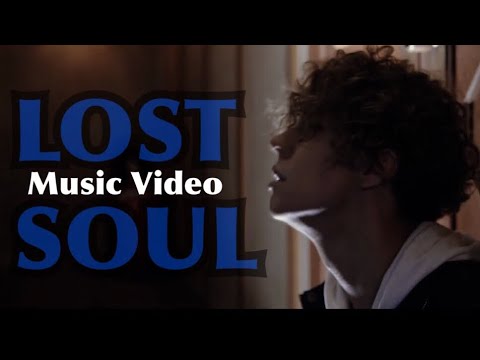
Hello guys, and welcome to a new video! Happy Halloween!
Today it's the 31st of October.
If you have seen the video of me and Daniela from Le Terre Lontane, please follow her,
because she is a fantastic singer.
I'm sure that you're asking yourself: Why did I put a video where I sing in italian,
if I'm talking about Japan? Well, I decided to put it anyways.
It's a video that we made without money... everything was sponsored by YouTube Japan
Above that we spent more than the given Budged, so we earned nothing...
but, yeah it's a thing that only happens to me.
So, Daniela sang in the video, did the background vocals and I also appeared in it.
I had this very curly blond hair
- say nothing -
Please say if you liked the video.
I wanted to say something, because for sure there are some of you that don't know that:
that song was the soundtrack of YouTube Horror Story,
that's a story that I wrote with Lilletta last year
it came out with 6 episodes and 3 "half-episodes"
all these small episodes are connected with each other, I recommend you to watch them.
Now it's Halloween (well, I don't know when this video will come out)...
so, these stories are mixed with horror and fun,
I think they're good.
Watch them and afterwards tell me what do you think.
I'm also in it as the character Sebastian
also Stefano Piffer's voice is in the italian version
So, let me know if you enjoyed it.
Thank you so much for watching, see you next time
I always post at 2pm (Italian time), leave a LIKE, and so on
BYE AND HAPPY HALLOWEEN!
Rachel
Jun
Sharla
Ciaela
Kisamake
Sebastiano
Sunny
Simon
Martina
-------------------------------------------
The Most Satisfying Video Compilation - Fast Workers 2017 - Amazing People Skills God Level 2017 - Duration: 11:18.
The Most Satisfying Video Compilation - Fast Workers 2017
-------------------------------------------
The Rise of YouTube: From Cat Videos to Global Advertising - Duration: 8:48.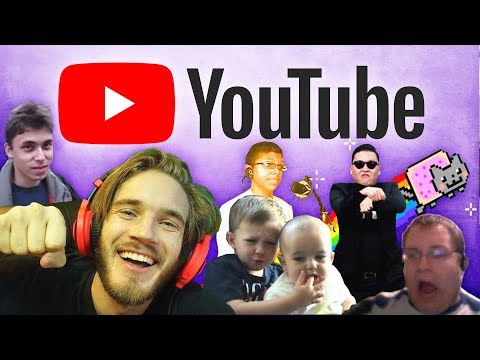
The modern world works in video: from news reports to education, reaction gifs and just
laughing at people injuring themselves.
And all of that is really thanks to just one company.
That's why today we'll be going a little meta by looking at our mysterious overlord:
YouTube.
This video is brought to you by Squarespace.
Build beautiful websites easily and affordably by signing up with the link below.
Like the founders of several other big tech companies, the creators of YouTube met while
working at Paypal, back when Elon Musk was still calling the shots.
In October 2002, when eBay acquired PayPal for $1.5 billion, Chad Hurley, Steve Chen,
and Jawed Karim became instant millionaires.
This was especially important for the latter two, because they had both dropped out of
college just before graduating.
Chad Hurley was a designer, so he quit PayPal to work on a few projects like designing bags
and working on a feature film.
Jawed Karim actually finished his degree online, while Steve Chen stuck around at PayPal for
a few more years.
The three remained friends, however, and met up frequently to discuss ideas for their own
company.
The actual spark that inspired YouTube is a different story, depending on which founder
you talk too.
It was either because they couldn't send large videos, or because they couldn't find
footage of Janet Jackson's famous wardrobe malfunction.
Their first ideas for the platform though, were actually a bit different.
Like Mark Zuckerberg, they were big fans of a website called HotOrNot.com, where you could
rate people's appearance.
They imagined a site where members would put up a kind of dating profile video, talking
about who they were and the kind of person they were looking for.
But pretty soon they dropped the idea, in favor of a more universal platform.
The domain youtube.com was activated on 14th February, 2005 and just two months later Jawed
Karim uploaded the first ever YouTube video: him in the zoo.
By May 2005, the YouTube website was up and running, and appropriately featured videos
of Chen's cat.
Suffice to say, YouTube was a success from the very beginning.
Much like PayPal, it's beauty was in its simplicity.
In contrast with competing services, one of which was Google's, uploading a Youtube
video was free and you could upload as many as you wanted, as long as they weren't too
big.
But with no way to profit from their service, YouTube was burning money fast.
Luckily, the PayPal mafia was here to help, with former CFO Roelof Botha investing $3.5
million in seed funding, around September 2005.
This investment was vital as the site needed time to grow and to establish itself before
monetizing.
By November 2005 YouTube was hands-down the biggest video platform, serving 2 million
videos per day.
Server costs were becoming so massive that YouTube ran out of money less than six months
later, causing Sequoia Capital to injected another $8 million.
At the time, YouTube's biggest problem was licensing, but movie studios and record labels,
quickly saw the benefit from short clips being shared among users, as the first viral videos
began to appear.
By October 2006 it was clear that YouTube was the winner in the video platform race,
but Google wasn't ready to give up just yet.
Instead, they put down 3% of the entire company's value on the table, which persuaded Hurley,
Chen and Karim to sell YouTube.
Outsiders thought that Google had paid way too much, spending over $1.5 billion for a
website that hadn't made a single dime.
But Google was confident it had made the right decision, and the synergies between the two
companies were truly exceptional.
Google's army of lawyers quickly settled the majority of YouTube's legal troubles
and even resulted in profitable deals being signed with the likes of Sony, Lionsgate,
and MGM.
With Google capital, YouTube also developed an automated copyright system, Content ID,
which could reliably detect copyrighted content as soon as a new video was uploaded.
By utilizing Google's vast server farms, YouTube could also reduce their hosting costs,
which were already approaching $2 million per day.
But the ultimate benefit, was the integration between YouTube's video platform and Google's
advertising arm, AdSense.
One of the reasons behind Google's success as an advertising platform was its access
to immense amounts of information, which YouTube could provide in spades.
YouTube's main problem, on the other hand, was a lack of monetization, which AdSense
easily solved.
By showing ads next to videos, YouTube finally started generating revenue, but despite that
it has never made a profit.
By 2009 YouTube was showing 5 billion videos every month, earning way less from ads than
they spent on hosting.
As a consequence, that year YouTube lost $470 million dollars.
But that didn't really matter, because YouTube's true value for Google is the information it
has about its users: what you watch, what you like, what you comment.
In a way, YouTube is profitable, it's just that a big chunk of its value isn't easy
to determine.
Of course, the ultimate goal for YouTube is to replace television, and to do that YouTube
needed to be more than just an archive of TV clips and cat videos.
It was in their interest to promote original content and to that end in 2011, they partnered
with numerous celebrities and production companies to create unique, high-quality content.
After a $300 million investment, in March 2013 YouTube was ready for the next step in
its master plan: moving towards a subscription model.
The first iteration was called Music Key, which allowed you to stream music without
ads for a monthly fee.
In October 2015 it was incorporated into YouTube Red, which removed ads across the whole platform
and gave access to exclusive content.
The adoption rate for YouTube Red isn't particularly spectacular.
By the end of 2016, it had only 1.5 million subscribers.
And it does make sense: in the age of Adblock it's hard to get people to pay for something
they've been getting free for years.
Speaking of Adblock, it would only be fair to discuss the recent trouble YouTube has
had with its advertisers, better known as the Adpocalypse.
In short, the Wall Street Journal ran an article about how ads were being shown next extremist
content, particularly attacking the biggest YouTuber out there, PewDiePie.
Big advertisers got worried this could become a public relations crisis, so they stopped
spending money on YouTube.
Of course, YouTube need those advertisers to keep the platform running, so they introduced
options for what kind of videos brands don't want their ads to be shown on.
These categories include "tragedy and conflict" and "sensitive social issues", both of
which are pretty open to interpretation.
This resulted in many videos which should've been ok getting demonetized, so no ads running
on them.
YouTube were, of course, fine with that, since it meant bringing back advertisers at the
expense of a few channels losing their revenues.
Unsurprisingly, that's exactly what happened.
Many YouTubers got their livelihoods destroyed, while the YouTube advertising platform returned
to record profitability.
In fact, YouTube's exclusive ad platform for high-spending advertisers is already sitting
at a record number of participants, way more than even before the Adpocalypse.
What this fiasco really showed, however, is that YouTube is beholden advertisers.
Ultimately, it is the big brands that are the customers, while both content creators
and viewers are merely users of the platform whose priorities are of lesser importance.
The good news is that YouTube channels don't have to rely on AdSense revenue alone.
Here at Business Casual, for example, I rely much more heavily on Patreon and sponsorships.
In fact, without these two pillars of support, Business Casual just wouldn't exist.
But luckily I've got the support of both dedicated viewers like you and of awesome
companies like Squarespace.
If you ever need to build your own website, be it for a hobby or your CV, Squarespace
is the best platform you could use.
They cover your domain registration, hosting needs and most importantly, provide you with
over a hundred customizable designer templates, all for as little as $12 a month.
My experience with Squarespace so far has been nothing short of exceptional, and to
let you get a first-hand experience with them, I'm giving you a 2 week free trial and 10%
off your first order if sign up with the link below.
Visit http://squarespace.com/businesscasual and you'll be on your way to building a
stylish website easily and affordably.
Of course, I want to give huge thanks to everybody on Patreon for supporting me and to you for
watching.
Make sure to follow me on Facebook, Twitter and Reddit to stay in touch, and as always:
stay smart.

Không có nhận xét nào:
Đăng nhận xét