Thứ Tư, 22 tháng 2, 2017

Waching daily Feb 22 2017

[Everyone] ♫ -Tonight ♫

[Everyone] ♫ 'Cause I'm just holding on for tonight ♫

[Everyone] ♫ I'm just holding on. On- ♫

[Everyone] ♫ Stand by me ♫

[Everyone] ♫ Stand by me ♫

[Everyone] ♫ I say, "hey what's going on?" ♫

[Female] Whoo!

[Darren Criss] ♫ What'd you say? ♫ [Everyone] ♫ And I say "hey"- ♫

For more infomation >> [CC] (2/22/17) Instagram video of Michael Arden's artist party - Duration: 0:26.

-------------------------------------------

Video: Journalist reflects on his interview with MLK - Duration: 1:49.

>> TODAY'S GATHERING OF LARGEST

IN WASHINGTON'S HISTORY.

LISA: IN HIS ALMOST 90 YEARS

MOSES NEWSON HAS SEEN THE CIVIL

, RIGHTS MOVEMENT FROM MANY

ANGLES.

AS A WRITER FOR THE AFRO

-AMERICAN NEWSPAPER, HE LAST SAW

DR. MARTIN LUTHER KING JR. IN

ATLANTA THREE WEEKS BEFORE HIS

, ASSASSINATION.

NEWSON RECALLS INTERVIEWING KING

IN A CAR SPEEDING TO THE

AIRPORT.

>>'S WIFE, CORETTA WAS THERE.

-- HIS WIFE, CORETTA, WAS THERE.

LISA: NEWSON SAYS IT WAS A TOUGH

TIME FOR KING.

THE A IN THE EYE DIRECTOR, J

EDGAR HOOVER, -- FBI, JAEGER

UBER WAS HOUNDING HIM, SOME

, -- J EDGAR HOOVER, WAS

HOUNDING HIM, AND SOME CIVIL

RIGHTS LEADERS HAD BEGUN TO

QUESTION IF HIS POSITION ON THE

VIETNAM WAR WAS HURTING HIS

CIVIL RIGHTS LEADERSHIP.

KING TOLD NEWSON ONE CAN'T FAIL

BY TAKING A STAND AGAINST

INJUSTICE.

>> IF HE HAD LISTENED TO SOME OF

THE CRITICS, HE WOULDN'T BE

DOING WHAT JESUS CHRIST DID

BECAUSE SOME PEOPLE MIGHT HAVE

CALLED HIM INEFFECTIVE BECAUSE

IN THE END HE WAS CRUCIFIED.

HE WAS A YOUNG MAN WHO A

39-YEARS-OLD HAD BEEN PREACHING

NON-VIOLENCE.

HIS LIFE WAS TAKEN AWAY.

LISA: DECADES LATER, DR. KING IS

REMEMBERED WITH A NATIONAL

HOLIDAY, A NATIONAL MONUMENT IN

WSSHINGTON, D.C., AND MANY MORE

-- WASHINGTON, D.C., AND MANY

MORE MONUMENTS AND TRIBUTES

AROUND THE WORLD.

NEWSON SAYS HE WAS A MAN FIRMLY

IN THE STRUGGLE OF INJUSTICE.

>> HE WAS A MAN FOR HIS TIMES.

HE WILL NEVER BE FORGOTTEN.

For more infomation >> Video: Journalist reflects on his interview with MLK - Duration: 1:49.

-------------------------------------------

Peter D. Kramer on depression, antidepressants, and psychotherapy - Full interview | VIEWPOINT - Duration: 34:04.

Sally: Peter Kramer, welcome to American Enterprise Institute.

Peter Kramer: Thank you.

Sally: Very excited that you're here to talk about your new book, "Ordinarily Well."

Peter Kramer: Yes.

Sally: And of course, people know you, I think, most as the author of the 1986 "Listening

to Prozac."

Peter Kramer: '93.

Sally: '93.

Peter Kramer: We go back to '86, you and I.

But...

Sally: "Prozac" came out in 80...okay.

Peter Kramer: Yeah.

Sally: Right, of course.

And yes, in fact, we go back even before that, because everyone knows you're the author of

"Listening to Prozac," but they don't know that you were one of my favorite teachers

at Brown Medical School.

Peter Kramer: Right.

Exciting.

Sally: We were both together.

Peter Kramer: It's good to have such an accomplished student.

Sally: Well, thank you.

I mean, you saved me from radiology.

Remember I was almost headed in that direction?

Peter Kramer: I remember.

You thought you'd be better with people.

Sally: With people.

Peter Kramer: Right.

Sally: Okay.

So, great.

So here we are to talk about, as I said, "Ordinarily Well," which is about antidepressants.

Peter Kramer: Right.

That controversy about antidepressants.

Sally: And there is a lot of controversy.

So, just before we get to the controversy, just let me ask you a basic question.

What are antidepressants for, and what is depression?

Peter Kramer: Right.

So let's start with depression.

People feel hopeless, sad, they don't experience pleasure, they have low energy.

Lots of other symptoms.

Sleep appetite, maybe suicidal, and at a level that really interferes with their lives.

And those are sort of the modern definitions, but we know depression when we see it.

Depression used to be diagnosed years ago by doctors just feeling that these patients

were really sad in a way that the person sitting across from the experience as very burdensome.

And it turns out that that condition which has been recognized by humans as a disorder

forever, going back to Hippocrates and melancholy, forever, is a multi-system disease.

If you have it long enough, it interferes with the way you make bone, the way you make

blood elements.

It interferes with your hormonal glands.

It is a true bodily multi-system disease, you know, seen at that level, and it's a disorder

of the mind, you know, as we experience it between people.

Sally: Right.

So the brain and the mind.

Even though everyone knows they're effectively the same thing, but different levels of analysis.

Peter Kramer: Right.

Sally: And different language and different ways of entering those frameworks.

So, say a little bit about the history of antidepressants, and what are the antidepressants,

at least that most people use today?

Peter Kramer: So, for all of medical history, going back to Hippocrates, doctors have wanted

to have some substance that would combat melancholy.

You know, this terrible, leaden, flat, you know, death of the soul where people just

can't get moving, can't engage in life, think about killing themselves.

And in 1957, using a couple of different substances, different doctors got the idea that they actually

had something to hand that did this.

There was this doctor I write about at length in the book, Roland Kuhn, in Switzerland,

who had a medicine that was supposed to treat psychosis, gave it to patients.

Wasn't very good, but some of the patients got less depressed and he got permission to

give it to depressed in-patients, out-patients, more and less seriously ill people, and he

realized he had an antidepressant.

And pretty soon there were some sense of what this medicine was doing in the brain and how

that might relate to mood disorders.

So, you know, 1957 is sort of the conventional date.

Sally: What was that called?

Peter Kramer: That medicine was Imipramine.

Trade name was Tofranil.

There were others.

So those were in use.

They're still in use now, but I mean, they were widely in use up through the 1980s and

we started getting this new group of antidepressants that had more affect on a chemical use for

transmission in the brain called Serotonin, that has more effect on the transmission that

uses that medicine.

And they were medicines like Prozac and Zoloft, later Celexa, which was earlier in Europe,

and Lexapro.

So, a lot of the medicines you might have heard of as antidepressants started coming

into use in the late '80s and 1990s, and they're the ones that are mostly given now.

Sally: You know, I worked in a clinic...

I mean, I work in a methadone clinic all the time, but I did some extra work last year

in a more general psychiatric setting.

And I was referred so many people who are given the label of "depression."

Peter Kramer: Right.

Sally: And yet, they actually...they didn't strike me as that depressed.

They struck me as demoralized.

Peter Kramer: Yeah.

No, I think your gut, the experienced doctor's gut, is really a good way of understanding

depression.

I think we have lots of trouble studying it because no one wants to say, "Well, doctor,

what's your gut call on this patient?" and study that patient.

Everyone wants these catalogs of symptoms.

But yes, I think the quality of stuckness, the sense that the person's perspective really

is distorted, that something goes well, they can't see it as going well.

It only reinforces the hopelessness.

So it's both stuckness in terms of the fixed negative perspective.

That's very hard to emerge from, even in the course of, you know, a conversation.

And then the longitudinal stuckness, it just remains day after day.

And good things happen and it stays there despite...

Sally: So the lack of reactivity is more diagnostic as it were of depression.

Peter Kramer: Right.

Sally: Whereas so many of my patients were, as I said, I think more demoralized.

Their life circumstances were so chaotic.

A lot of these people were inner city folks.

Peter Kramer: Yeah, I mean, there's a whole...

Sally: It doesn't mean those folks can't get depressed.

Peter Kramer: ...complicated discussion we could have, because, you know, there's this

dispute in the field about grief.

And you know, if there's a good reason for you to be depressed and you have all the symptoms

of depression, they last and last.

Is that depression or is it not?

And I would say, and I think the field more and more is saying, it is.

If you do these complicated, you know, genetic studies, the studies come out better if you

count that as depression.

So just the mere fact of having a cause, I think doesn't get you out of the category.

But yes, people sort of slip in and out, and they have good days and bad days.

We don't want to call that depression.

Sally: Yeah.

Well, you know, you just hit on a major theme of your book, which is that gut instinct,

that clinical experience, the clinical encounter, versus the randomized control clinical trial.

Peter Kramer: So we have these very objective ways of looking at depression, ways of measuring

it, ways of doing studies where you compare treatments to non-treatments, or proxies for

treatment, and then inert proxies.

And then we have sort of what doctors see every day.

And the question is, you know, what counts as evidence?

And of course, nowadays, and maybe forever, we value the more objective stuff more.

But there's sort of a benign dialectic between the two, right?

If the research shows something, doctors try it.

If doctors try it and it's working, there's more research.

So that really we have kind of a complicated form of information.

But what I like to think about is, if you are meeting with a doctor, and you're depressed

or your relative whom you love is depressed, and you want that to change, what do you want

to inform that encounter?

And to some extent it's objective research, to some extent you probably want some experience.

So, I think we could have a more complicated notion of what counts as evidence.

Sally: The essence of a randomized clinical trial, just to go back to that, is something

that it's hard to assess in the clinical encounter, and goes to the virtue of these trials, which

is placebo.

And the placebo issue is one with lots of resonance for your book.

Let's just start with the fact that I think it inspired your book.

Peter Kramer: Right.

There was all this talk about these medicines just being placebos with side effects, which

means dummy pills that make you feel like you're on a drug, and you're not getting better

because of the inherent efficacy of the drug because of the way the drug interacts with

your brain, it alters it and allows you to behave differently, the whole complicated

series of things that may inform recovery.

No, the claim was, any pill, a sugar pill would do the same thing, if you believe it

was an antidepressant.

And that claim, I think, started causing doctors, even though these medicines are widely prescribed

in critical situations, not to turn to the medicines when I would say they should.

I think that is a canard.

I don't think depression is very placebo responsive.

I mean, I think we want to distinguish two things.

To know that the medicines work, what we'd like to do is set up a situation where we

see how people do on the medicine and we see what's causing the hypothetical counterfactual

"What would have happened if they had the same weather, the same spouse, the same contact

with doctors, but didn't get the active ingredient in the drug?"

So, how would they do without treatment?

How do they do with treatment?

And that gets confused with this much more particular idea, which is people get better

because they have faith in a pill.

That seems to me a much narrower belief, and there's a lot less evidence for that.

Sally: But some people do get better, surprisingly better, with social stimulation and connection.

Peter Kramer: Right.

Sally: I remember seeing a patient who I thought for sure would need shock therapy.

I mean, that's how almost immobilized this woman was.

She lived with her mother.

It was almost like a "Now, Voyager" situation where she lived with her mother well into

her adult life, and the mother died.

And on the one hand, of course she found it liberating, but there was an enormous burden

that came with it.

That was the first visit and then she of course was coming back, and I thought "For sure we

need hospitalization."

She was living with a sister otherwise.

I thought maybe we'd need it that day.

But I was shocked at how she could rally a bit.

Now, I hate to admit, she dropped out.

So, she may well have relapsed into that.

Peter Kramer: Yeah.

But maybe not, right?

I mean, I think we see this.

The reason we as psychiatrists like to sit with people a while is that if you can...you

know, it's not urgent, you don't have to worry about suicide immediately or loss of a job,

or divorce, whatever it is, and you have a little time to sit, sometimes you find listening,

supporting, teasing things apart, passage of time, people get remarkably better.

People got better from depression, sometimes, before anyone invented...

Sally: Yeah, and that doesn't mean it's any less real.

Peter Kramer: No, no.

And that's why...

Sally: Although, I think people can think it's any less real.

Peter Kramer: That's why you want to do these trials, right?

Because when you have people come in, you take their blood pressure, you talk to them,

you ask them about their depression, do a long inventory, spend a lot of time with them

week after week in the course of a drug trial, maybe it's all that human contact that's helping.

Maybe I take people in the book to a drug trial center and I go out in the van.

You know, the van picks people up where they live and brings them to the center.

And just the conversation in the van is very supportive.

So, lots of things go on in a drug trial and we don't want to attribute that kind of benefit,

if it's beneficial, to the drug.

We want to know what is the drug doing beyond all that human contact.

Sally: So when you see a patient, unless you think someone is suicidal and you have to

act in an emergent way, do you have kind of an intuitive algorithm?

I mean, I don't think you rip out your prescription pad on the first visit.

Or maybe you do sometimes.

Peter Kramer: I mean, I do.

I think that, to some extent, I'm the instrument.

And I ask myself, "How worried am I?"

If I, as the conversation progress, get more and more alarmed, you know, I take that to

be a reason for a question or possibly action.

Whereas if things look bad at first and as we talk I get a sense of some reasons why

things are happening and some flickers of responsiveness, some human connection, then

I think, "Well, we can...if we're to be a little patient, maybe we're gonna do some

good along the way."

And not to say that I may not reach for the prescription pad at a certain moment, to me,

you know, we know that this is a disorder that is destructive in itself, that people

start losing memory.

There are extraordinary studies you don't wanna know the answer to, where people stay

depressed for a long time and their risk of the next episode is greater, the downstream

episodes tend to be more complicated, they need more treatment.

You'd like to interrupt an episode of depression.

And I think, to me, the measure of the utility of a treatment is that it works.

I know that sounds, you know, sort of circular, but it's remarkable how often people don't

appreciate that.

They say, "I believe in yoga and meditation."

Well, that's fine, but is your depression retreating or is it progressing?

If it's progressing, maybe it's time for one of these much better tested remedies like

psychotherapy or medication, or both.

Sally: Right.

And the ideas...

Well, I thought you challenged this a bit in your book.

The idea was that they actually had a synergistic affect.

Peter Kramer: Yeah.

Sally: And you seemed a little skeptical of that.

Peter Kramer: Well, you know, I think the main thing I'm doing in the book...

First of all, I want to say this is a complicated book, I hope, in a good way.

It has a lot of history.

Sally: It's very readable.

It's incredibly readable.

Peter Kramer: That's what I want to hear.

I worked so hard at getting it readable.

And there's some technical things in it but I do a lot of storytelling, both from the

history of psychiatry and for my practice, and sort of the intersection, my time spent

with some of the pioneers in the field who were developing understanding of depression

and depression treatment.

So I tried to put everything in a very humane, I hope, context.

But also to look at some of the fallacies.

It seems to me that there are a lot of attacks on antidepressants, some of them very legitimate,

based on things drug companies have done that cross ethical lines.

But attacks that really come, I think, from a misguided sense that attacking antidepressants

defends psychotherapy or defends humane approaches to illness, which I think is not the case.

And so that a lot of the book is saying, if we were going to talk about objective evidence,

what's objective?

What's good evidence?

And the truth is, if you like the evidence for exercise, diet and whatever, you're gonna

love the evidence for psychotherapy.

It's much stronger.

I'm sorry, I was gonna say for pharmacology, true for psychotherapy also.

And that particular question of the intersection, does it help to combine medication and psychotherapy,

I think it does.

It's what I do.

If I'm medicating patients, I'm seeing them often, I'm trying to puzzle out what's going

on in their lives with them.

But it turns out to be actually very hard to show that the combination is a lot better

than medication alone, partly because medication does pretty well.

Sally: Actually, that brings me to my next question, which is, can you actually put a

number on the effectiveness?

Peter Kramer: It turns out to be very hard.

Let me tell you the main problem with putting a number on these drugs work.

And when you have a drug that works, and they're generic and you can get them on Medicaid,

and you can get them in HMOs and so on, a doctor who's ethical, facing a patient with

serious depression, where the moment arises to prescribe, will prescribe a medicine, not

send the person to a drug trial where he or she might get a placebo.

So it's very hard to get a good collection of patients.

There's some astonishingly good effects.

There was an open trial in Sweden, in primary care clinics, and it was sort of a select

group of people.

They weren't suicidal, they weren't alcoholic.

They just had, you know, probably fairly easy to treat depression.

And at the end of six months...over 90% of people on a routine antidepressant.

It was Celexa.

Citalopram.

Had at least half of their symptoms remit.

So they were somewhat better.

So, you know, probably numbers in the 60%, 70% range for the first thing offered or more

reasonable.

There's a funny number, 30%, that we read a lot.

That 30% came from a study of patients who had been depressed 15 years, they were in

the seventh or eighth episode of depression, they were two years into an episode of depression,

they hadn't responded to other treatments.

Most of them were also alcoholic or had another mental illness.

And 30% of them, in the first medicine given, ended the episode of depression.

Which was considered not a good outcome, but I think it's a pretty good outcome.

Sally: And it's a pretty refractory group.

Peter Kramer: In that tough group there are other studies...there's another wonderful

study where doctors were allowed to do their worst.

Just, you know, change the medicine, add medicine, just do whatever you need.

And you could take a group that looks like that, and most of them would leave an episode

of depression and stay well for six months.

Sally: The initial excitement, and the continued popularity of these Selective Serotonin Reuptake

Inhibitors, which is the class that Prozac belongs to, and other inhibitors, like Celexa

and Zoloft, was that their side effect profile and their dangerousness in overdose was a

lot less.

Peter Kramer: Right.

So when these medicines became available, in Europe and here, in the late 1980s, it

wasn't thought that they were gonna be such terrific antidepressants, but was thought

they would be better tolerated and maybe better for parts of depression that the traditional

drugs had missed a bit, like social anxiety, social isolation, and so on.

Those little factors, being better tolerated, not making you feel like you were on a medicine,

not giving you dry mouth and constipation, and allow you maybe a little more social comfort,

those turned out to be much more important than doctors had imagined.

Patients really liked these medicines better and you could leave them on them longer, which

leads to a whole complicated discussion of how long.

But people just didn't want to get off them right away.

Sally: And you think...in your book, you clearly tried to get to the bottom of this, because

there are really no good data available, but that severe major depression, what used to

be called melancholia in the old DSM, but is not designated that anymore, now would

be called severe depression, which is marked by immobilization, sometimes even psychotic

ideas about rotting, feeling dead inside, being dead...gosh, almost a pseudo kind of

dementia profile.

Peter Kramer: Yeah, that terrible thing you see in Dürer etchings, you know, the person

who's rubbing his hands and looking at the ground, and swaying and very thin, almost

to the point of dying.

You know, that depression.

Sally: Yeah, that species, at least in this country, may have started to fade because

we've gotten in sooner with these medications.

Peter Kramer: Yeah, I mean, I don't wanna live or die as a thinker, based on that observation,

but I think we see less of it than we did even early in my career which goes back - I

hate to say it - 40 years.

But, yes.

Sally: Which is different from some of the cultural distinctions.

Like, we may not see hysteria anymore, or recognize it as such because we've...

Peter Kramer: I mean, we don't know why we see less.

It might be that there have been some cultural changes.

And we certainly don't have less suicide, so it's not like we've done this perfect job

with mood disorders.

I mean, I think suicide did go down probably after these medicines came in and it's come

up a bit for complicated reasons.

But I do think that particular very disturbing form of depression that you really would hate

to see - anyone would hate to see it - I think we see less of it, and I think likely it's

because we interrupt depression in its course with these medicines.

Sally: Do you think...

Some say - I'm echoing a political candidate here - that antidepressants are over-prescribed.

Peter Kramer: Right.

Folks say that.

Sally: What do you say?

Peter Kramer: You know, it's a complicated story.

I have what I think is a fun chapter in the book where I look at different ways of looking

at the same study where one group looks at it and says, "We don't have this specific

diagnosis.

We need...

Doctors are prescribing people who don't really have this core problem, depression."

Another group says, "Yeah, but these people have been hospitalized for depression before.

They had terrible events in their lives.

They have other illnesses alongside."

On the whole, the group prescribed for is a pretty acute and chronic group.

It's a group with a lot wrong with them.

So I think it's hard to know.

I think probably both things are happening, that people who don't need the medicine are

on them.

And certainly it's the case that maybe people who could benefit from the medicine have never

been on antidepressants.

So I think we need to get a little more precise in prescribing and educating doctors about

how to prescribe.

Sally: Yeah, and the keyword there is doctors, because most of these medications are actually

prescribed...

Psychiatrists are doctors, of course.

But they're prescribed by primary care doctors who don't have the kind of followup that you

have.

Peter Kramer: Right.

However, I do think they're...and I'm, you know, maybe out on a limb or not in the mainstream

in this, that the main problem with primary care prescribing is that people go off the

medicine.

They aren't followed up well, they aren't encouraged, they don't know how to translate

some little progress and greater progress, they go off the medicine.

The other problem that doctors are simply over-prescribing I think is counterbalanced

by the enormous tendency to under-prescribe before these medicines became popular.

So a lot of depression was missed diagnostically, and most of what was diagnosed wasn't treated,

and what was treated wasn't treated thoroughly.

So I think probably on the better/worse side, we do a little better than prior generations

did.

Sally: That's certainly not unique to depression.

It's the story of ADHD and other things as well.

I'll just ask one more question.

This sort of echoes something I asked you before.

When a patient comes to you and they've sort of suffered what we call an acute insult,

like, they just got a divorce, or they lost their job or there's a death in the family.

And clearly they're presenting with sadness, they're crying, they've lost interest.

Maybe they're not eating as much.

Assuming again it's not an acute situation where you feel they're a danger to themselves,

how long might you wait?

I mean, I know there's not an "Oh my gosh, it's been three weeks.

Time to start the Prozac."

Peter Kramer: No, I'm not looking at my watch or the calendar.

First of all, with these cataclysmic events, most people have fairly varied psychological

responses.

So they may be a little depressed, a little anxious, a little angry, irritable, a little

isolated.

So there's lots of things going on, and most of the responses don't have this syndromal

form of looking just simply like an episode of depression.

So, one thing that catches my attention is if this just looks like depression, I'm interested

if there's a family history of depression, if there's past episodes of depression, if

there's suicides around, you know, in the family history, say.

That has my attention.

Sally: If they're drinking or using drugs.

Peter Kramer: If they're drinking or using drugs.

I'm not happy.

That doesn't necessarily make me rush to use the antidepressants.

Sally: It gets your attention.

Peter Kramer: It gets my attention.

And then I think, if the depression...speaking about it as a sort of syndromal thing, the

lack of ability to experience pleasure, a loss of interest in ordinary activities.

Difficulties at work are a good marker.

We like people to be able to get up in the morning still and go to work and be seen by

their coworkers as doing an ordinary job.

Yeah, if things start going wrong in that way and staying wrong, I start thinking "This

is not just a normal response to bad news.

This is starting to worry me."

And as I say, worry is kind of my deep marker for having a discussion about medication.

Sally: So what's been the reception to the book, if you were to make a distinction, or

maybe there isn't a distinction, between how your colleagues reacted to it and how the

reviews in the popular venues reacted?

Peter Kramer: I was very worried about responses to this book.

I just kept saying to people I knew, "I'm just gonna be attacked mercilessly," because

there's such, I think, a leaning in the press to reporting things that are negative about

drugs, underreporting things that are confirmatory about they're working.

And that didn't happen.

I think I got lots of thoughtful reviews.

Some were...you know, had some skepticism.

But I also got these really rewarding reviews: the Sunday New York Times' Scott Stossel,

the Book Review, the Atlantic, Jonathan Rosen.

These are just the kind of reviews that look at my career as a whole, say where this book

fits in, and I think give me the sort of benefit of the doubt that this is a humane, thoughtful,

caring person...

Not to pat myself on the back, I'm just saying what I always hoped would come through in

the book anyway.

Someone who wants to get it right, probably getting it right.

Sally: You have a literary background.

Peter Kramer: Yes.

Sally: You did post graduate work in English Literature?

Peter Kramer: Yeah.

Sally: At...

Peter Kramer: University College in London.

Sally: And you've written...

Peter Kramer: A novel.

Sally: A novel.

Peter Kramer: By Scribner.

My baby, what I recommend to people, yes.

Sally: So you've got a...I guess I'd call it a kind of...

I almost think, frankly, the novelist where you learn the most about...

Peter Kramer: Yeah, I do, too.

Sally: About people's inner life.

Peter Kramer: I did one of these round up reviews and got people angry at me back when

the first slew of sort of psycho autopathography, the memoirs of depression were coming out.

And the New York Times Book Review had me write about six.

And I said, you know, it's probably good in terms of stigma, that people are writing this,

but here are these novels that have come out and collections of short stories lately that

I think really capture depression.

So, Tom Gun.

I forget what the list was.

Yeah, I'm a great respecter of literature.

Sally: I can't help but think that it influenced you as a therapist.

Peter Kramer: Absolutely.

Honestly, I'm thinking about literature all the time.

Robert Kohls was one of my mentors.

He's written about, you know, teaching short stories, thinking about short stories.

And often I'll be sitting with a patient and I'll think about, you know, some little snippet

out of Tolstoy or something, and I'll think, "That's where we are."

I mean, it's just my way of thinking, and I'm sure someone who's a pianist and a psychiatrist,

as some of our colleagues are, or a student of history, there are many things to bring

to bear in psychotherapy.

But I do think about literature and I think about narrative as I listen.

I think, "Oh, that's a false note.

We better go over that one again."

I don't know that I'd be doing psychotherapy at all if I hadn't been immersed in literature.

Sally: Yeah.

You still see medical students, right?

Do you still supervise them?

Peter Kramer: Less and less, I hate to say.

Sally: But you still have, I'm sure, your finger on, at least a weak pulse, of the kind

of teaching in psychiatry that goes on now in residency and medical schools.

Are you somewhat pessimistic?

Because I worry a little bit.

Peter Kramer: I do, I do worry.

For 15 years I taught a basic psychotherapy course.

And at the end of 15 years, and this is maybe 15 years ago, the head of the program said,

"This is too difficult for incoming students.

That's really a fourth year course instead of a second year course."

And I ended up actually never teaching it again.

I think it partly is that there's just less time for psychotherapy in the residencies,

partly it's that that whole framework of seeing things is different.

It used to be when it was a dispute with the nurses and social workers, someone would sit

everybody down and say what are the underlying conflicts you had to process.

I don't know that that goes on.

So psychotherapy has been a little marginalized in psychiatry.

Although I have to say I'm very encouraged there are young people coming out of training,

and I'm impressed with them, I refer to them, I think they're here for patients.

They're doing a good job.

Sally: That's reassuring.

Peter Kramer: It is what some smart people like a lot.

Sally: So, what should the...

You wrote the book to dispel some myths and clear the air on the issue of antidepressants

that's really been, I'd say, under...attack might not be too strong a word in the last

few years.

So, what would be the takeaway from "Ordinarily Well"?

Peter Kramer: Well, you know, I chose the title "Ordinarily Well" because I wanted to

say these medicines were ordinarily well, they're not...

You know, there are all kinds of side effects.

There are worries that antidepressants in the early going may make people more suicidal.

Same is true for some drugs for epilepsy.

They may make people more suicidal in the early going.

These are medicines doctors know how to use, they're kind of in the range of effectiveness

that tracks other treatments doctors use for all kinds of other conditions, and they don't

do something eerie.

They take people who are depressed and make them - this is another use of the phrase - ordinarily

well.

They bring them back to where they were, where they wish they had been.

You know, that said, there are a lot of other questions that aren't efficacy questions strictly.

They're, you know, how long do you leave people on?

Are there alternative treatments?

Are there side effects?

So, you know, as with any medicine, you'd like to have them in expert hands.

But the one thing I think we don't have to worry about is, in the first instance, are

they working through the way they're supposed to work?

Yes, they are.

They're not dummy pills, they're active chemicals that make it easier for the brain to make

more cells and make more connections between cells.

They allow learning to resume.

They unstick people a little from the two kinds of stuckness we discussed before.

Sally: And also, this book has interesting reverberations of "Listening to Prozac," because

in that book, you calling the term cosmetic psycho-pharmacology.

In other words, making oneself more attractive than before, or better than well, which would

be an improvement from baseline.

In this book we're talking about returning to baseline.

Peter Kramer: Right.

I think "Listening to Prozac" was a worrying book.

It said we have medicines that maybe have effects on personality, our doctor's gonna

be tempted to use them in overenthusiastic ways.

And "Better than Well" was people who had some episode, say of depression, got better,

thought they did a better job at work, or parenting, got over the episode and would

come back into their doctor and say, "I was better than well on that medicine.

Could you give it to me again?"

And so, I think having raised those worries about complicated uses of medicine, I wanted

to say that the most straightforward, simple uses for the treatment of depression are perfectly

legitimate, and in fact necessary, and that these are not, as I say, eerie substances.

They make people ordinarily well.

So, yes, it was in a way the reason I in particular felt I should enter that discussion and make

the correction against these debunking placebo-centered studies' claims was that I had sort of raised

some worries in a prior book.

Sally: Well, there's nothing ordinary about having you as one of my first mentors, and

wonderful to see you today.

And thank you so much.

Peter Kramer: Thank you.

For more infomation >> Peter D. Kramer on depression, antidepressants, and psychotherapy - Full interview | VIEWPOINT - Duration: 34:04.

-------------------------------------------

A 5½ minute video on accepting the effects of ageing. - Duration: 5:37.

(somber music)

[Woman] - I wish people had told me what to expect

when I was growing up because I'm still growing up.

I grew up in Vancouver.

I was born in Ottawa, I was raised in Toronto,

but I grew up when I got to Vancouver.

We came here when I was 15 1/2,

and boy did I grow up.

I got away from the family and the influences

of stuffy Toronto, the stuffy Toronto that we lived in.

I always depended on education.

I valued it.

It was valued in my family.

To me it was success, it was visible success.

I was living in the British properties,

four little children born in five years.

I built the house around us including me building

a lot of it and digging and doing gardening

with a shovel and pick, seriously.

It was just ridiculous when you look back.

I've always been a doer and I will not quit.

So I just did everything that had to be done.

I went back, got my last child into school,

and went back to university to do a second degree.

And what happened recently is that

the shoulder is slipping, the actual shoulder joint.

It's as though the glue had dried up

in a carpentry sense.

The glue's dried up and crumbled,

and my shoulder slips.

And when it slips, it bites tissue,

and grabs the nerve and then it bleeds internally.

So that's what I have, and I have a limited shoulder.

(somber music)

Part of the injury I think was the years

of writing on the blackboard because I was

university teaching for years as well

as every level literally.

You'll notice that I can only get

my right arm up this high.

Right up until this, I would be swimming

three times a week.

I live right down here, right downtown,

so I walk everywhere.

I walk to the opera, the symphony,

I do all my shopping, I walk for fun.

I really miss swimming because I can't,

they won't let me right now.

I miss tennis terribly.

I miss skiing.

These sports that were a joy to me.

I'm in my 84th year, and this is something

I want to share with people.

This is the process of aging.

It is nothing other than, I mean, okay,

a bit extraordinary work with that shoulder

but not much more than many other people.

But this is going to happen.

I had a little wish about a week ago thinking,

I wish people had told me what to expect

when I was growing up.

And I really mean growing up because I'm still growing up.

And if I had known that joints were going to go, okay,

corners go, knees, hips, I never knew my shoulder would.

(somber music)

So this is a condition that I will live with,

and I couldn't be happier because if that's the worst

I have to handle...

Amazed.

Because I can still use my hand,

if I, I'm very careful of my arm,

because I'm responsible for hurting myself.

If I move that arm wrong, I create the pain.

It's nothing the medical profession can stop for me.

I have to stop it, I'm the watchdog.

I went down and I said to them, the physiotherapy,

I want a supportive structure made out of elastic

or leather or whatever like a football pad

that holds my shoulder together

so it doesn't slip.

And the difference when it was on.

Oh, it's amazing, you can just feel the support.

I think the thing that makes me happiest everyday is

the more I can interact with people,

whether they be the kind neighbor

that lives in my building, or being able

to come down here and find the walking group

that we went out with on Tuesdays

and laugh and sit with them here,

even for a half an hour.

This is my neighborhood and it's part of my joy

to be in a neighborhood and this is what keeps me bright,

alert, and bothering because otherwise

what is my purpose here.

For more infomation >> A 5½ minute video on accepting the effects of ageing. - Duration: 5:37.

-------------------------------------------

A 5 minute video on alcohol addiction and recovery. - Duration: 5:03.

(contemplative piano music)

[Man] - When you're an alcoholic and you stop,

especially when you crash.

You go back twice as bad as you were,

and you go back exactly where you stopped.

(contemplative piano music)

Well, I was born in 1940 and I was raised

by a very different type of mother.

And I grew up in an atmosphere

where everybody drank and I thought

that drinking was normal.

Every movie I went to see,

they had a cocktail in their hand.

The first thing that people said

when you knocked on the door when you went to visit was,

"What'll you have to drink?"

And it seemed quite normal because everybody did that.

Everybody in my circles anyways.

It was a lubricant for me.

It was a stimulus, in a way.

It put me in a mindset where I could expand my thinking.

A lot of the very good decisions I made,

were always made with a double of Chivas Regal.

And I thought it was perfectly natural,

"this is the way things go."

And when you're start being a practicing alcoholic

and you step over the invisible line

that you don't know about because you're denying it,

you start to realize how many people you're effecting.

Because, the people that are living with you

are actually not living with you,

they're living with a puppet

that is controlled by alcoholism.

Now I need this stuff to get through life,

and life is throwing some pretty nasty curves.

With my first wife, the mother of my children,

developing Alzheimer's,

I didn't know how the heck

to deal with that, I really didn't.

When you start to turn the page,

and start to realize that

the Ivan Smirnoff, as I used to refer to him,

is no longer your friend.

He's screwing up your life a little bit.

And that takes quite a while,

because he's been a good buddy for quite a while.

So you've got to cross the line

where you get rid of that,

and start to deal with the world

with the real you that you are.

(soaring string music)

Then I met my second wife,

who, in exchange for her love and support,

insisted that I stop drinking.

She was a smart woman.

She caught me at the end of one of my falls,

and I put myself in a treatment center for a month

and I came out feeling top of the world,

so I stayed sober for 16 years.

It's so weird it was not a problem all of a sudden.

And like it became a very productive part of my life.

Then she died in my arms with liver cancer.

Well, that wasn't fun.

So, where did I go to?

My old friend Ivan.

Guess what happened?

You know, the next time I had a gig.

I ordered a glass of wine,

or a bottle of wine, I forget.

Sure enough, two months later,

I was was back into the mickey a day

and full Ivan was my friend again.

When you're an alcoholic and you stop,

especially when you crash,

and then you go back.

You go back twice as bad as you were,

and you go back exactly where you stopped.

(somber piano music)

I finally realized that,

in the few years that I probably have left,

I don't wanna crash, and if I would have kept on drinking,

I would have crashed.

And that required that I get very serious,

and very adult and

(sighs)

get rid of the little boy in me

who just couldn't face the fact

that he had this problem.

And since I've done that,

I've acquired, sort of like an epiphany,

I've acquired a different value of my life,

and I enjoy it.

So, and sometimes now, since I'm sober,

I sit and I say to my partner,

my ex-wife who lives with me,

I'm just humming.

I'm just humming with pure joy of my good health,

which is remarkable, after what I put it through,

and the fact that I can be at peace.

What excites me now, very much,

is the effect I have on people.

I can, I can turn people around

and make them smile, and I know I'm helping them.

I know that they feel happy that they've met me.

(inspirational orchestral music)

For more infomation >> A 5 minute video on alcohol addiction and recovery. - Duration: 5:03.

-------------------------------------------

A 5½ minute video on the after-effects of surviving an attack. - Duration: 5:38.

(melancholy music)

- [Man] I couldn't defend myself.

I didn't see it coming because

it all happened behind my back.

(music continues)

In March, 2014,

I got on to the bus.

I was first in line at the stop, and I got on,

and I sat in the first single seat on the left,

which faces towards the back of the bus,

so I didn't see my assailant coming behind me.

The next thing I knew, I was being

beaten about the neck, and shoulder,

and,

the force of the attack and the pain

bent me forward, and then eventually,

I fell to my knees on the bus.

A young man came running from the back of the bus

to intervene,

and apparently, my attacker left the bus at that point.

No one called the police.

No one called an ambulance.

I just continued on the bus until my stop,

and then,

soon as I got home, I called 911.

The police insisted on calling an ambulance,

and I was taken to hospital,

and checked out and given some painkillers.

The police brought me a huge file,

going back, oh, 11 years more,

and they showed me the picture of the person.

I didn't recognize her.

I hadn't seen anyone, but my neighbor recognized her,

and apparently this woman is, it was a woman,

she's mentally ill,

and she has a reputation

for attacking people on the bus.

People who sit in that first seat.

I mean, who knew it was her reserved seat?

It helped that I knew why I had been attacked.

It wasn't because I'd done anything.

It was because I was sitting in her seat.

(music continues)

I had been abused as a child,

both physically and emotionally,

and so this attack was causing me all kinds of flashbacks.

I went for a series of counseling sessions for PTSD,

and with the help of the massage therapist,

I was able to cut back on a lot of the painkillers

that my physician had given me.

I have many, many illnesses,

and among those, I have fibromyalgia and ostheoarthritis.

The pounding that I received

hurt me, damaged me more than it might have

a young, healthy person.

It was a long time before I could go back on the bus.

I still have flashbacks

if there is ever a noise anywhere,

like a door banging

or someone

letting out a whoop

or, you know, being noisy.

I jump.

I have to leave.

When I volunteer at our information referral center,

I always choose the seat in the corner

so there's no one behind me,

and I can block the access to the desk

by, with my walker, so I don't have to (chuckling),

I worry about someone coming 'round behind me,

'cause if someone, a friend comes up behind me

and taps me on the shoulder, I jump out of my skin.

(music continues)

The police asked me if I wanted to lay charges

because they had a huge, long file on her,

and she has attacked

scores of people, seniors who sit at the front of the bus.

I said that all I wanted was

for her to get some medical help.

Obviously, she's not well, and needs some assistance.

I hope that is what happened.

I didn't see her for a long time on the bus,

but now she is back,

so we'll see how that goes.

(music continues)

For more infomation >> A 5½ minute video on the after-effects of surviving an attack. - Duration: 5:38.

-------------------------------------------

Surveillance Video of Suspect's Deadly Confrontation Released - Duration: 2:05.

DURING THE DATE TOMORROW WILL

MEAN WARMER WEATHER.

WE WILL TALK ABOUT THAT IN A

MINUTE.

GREENVILLE COUNTY

INVESTIGATORS HAVE RELEASED

VIDEO SHOWING THE FINAL MOMENTS

OF A MAN WHO WAS KILLED BY

DEPUTIES OUTSIDE OF AN UPSTATE

MOTEL.

7 NEWS DAVE JORDAN IS JOINING

US LIVE TO BREAK DOWN WHAT NEW

DETAILS IT REVEALS. THIS IS

THAT VIDEO IN QUESTION.

IT IS SECURITY VIDEO FROM

OUTSIDE THE SUPER LODGE IN.

A CAPTURED JASON MENDEZ AND HIS

CONFRONTATION WITH DEPUTIES.

INVESTIGATORS STATEMENT IS

PULLED A GUN ON THEM AND THAT

IS WHAT LED TO THE SHOOTING.

THE VIDEO WAS ABOUT 40 MINUTES

LONG.

IT HAS NO SOUND BUT YOU CAN

CLEARLY SEE JET -- DEPUTIES

ENGAGING WITH DEATH -- JASON

MENENDEZ -- MENDEZ TWO WEEKS

AGO.

DEPUTIES SAY THE CAR WAS

STOLEN.

MOMENTS LATER WHEN THE DEPUTIES

BREAKS THE WINDOW AND SHOTS

WERE FIRED.

HIS GIRLFRIEND IS PULLED IN THE

-- FROM THE CAR IN THE

AFTERMATH.

THE VIDEO WAS MADE PUBLIC FOR

THE FIRST TIME TODAY BUT HIS

FAMILY SAW IT YESTERDAY BEFORE

IT WAS RELEASED. WE STILL

BELIEVE THAT THIS SHOOTING MAY

NOT HAVE BEEN JUSTIFIED.

WE DO NOT SEE A REASON THAT

JASON WAS SHOT.

Reporter: INVESTIGATORS SAY

THEY RECOVERED A 40 CALIBER

PISTOL FROM THE CAR WHICH

MENDEZ POINTED AT THEM.

THEY ALSO TELL US DRUGS WERE

FOUND.

HIS FAMILY IS NOT CONVINCED.

IF HE HAD A GUN AND HE WOULD

HAVE PULLED IT AND HE DID IT OR

IT WOULD HAVE BEEN SEEN ON THE

VIDEO. Reporter: OBVIOUSLY A

DISTURBING TURN OF EVENTS AND

THIS WAS DIFFICULT TO WATCH AT

TIMES.

WE SHOULD TELL YOU THAT

INVESTIGATORS TELL US MENDEZ

HAD A CRIMINAL PAST SO HE

SHOULD NOT HAVE HAD A GUN IN

THE FIRST PLACE.

THIS IS SECURITY VIDEO FROM

OUTSIDE THE HOTEL.

THE DASHCAM VIDEO DID NOT

CAPTURE THE SHOOTING. THERE

WAS AUDIO ON THE DASH CAMERA

VIDEO.

THEY'RE TALKING ABOUT RELEASING

THAT. Reporter: THAT IS

SUPPOSED TO BE RELEASED AS

EARLY AS NEXT WEEK.

I AM TOLD HIS FAMILY WILL GET A

For more infomation >> Surveillance Video of Suspect's Deadly Confrontation Released - Duration: 2:05.

-------------------------------------------

Download This Video Your Own Channel - Duration: 1:35.

For more infomation >> Download This Video Your Own Channel - Duration: 1:35.

-------------------------------------------

Video: See how productive it is to 'Chill' - Duration: 1:53.

OMAR: FROM A CLASSROOM TO A

MOUNTAIN.

>> WHEN WE FIRST PULLED IN, YOU

CAN JUST SEE A HUGE MOUNTAIN AND

THEN YOU'RE THINKING LIKE, "I

KNOW WE'RE NOT GOING UP THERE."

WHEN YOU FIRST START OFF, IT'S

SIMPLE AND THEN IT'S JUST THAT

HILL, AND THE WIND KEEPS HITTING

YOUR FACE YOU GET NERVOUS.

OMAR: THE NERVES WOULD SOON

FADE.

TYREE'S PART OF A PROGRAM CALLED

CHILL, IT TAKES KIDS JUST LIKE

TYREE FROM THE CITY TO LIBERTY

MOUNTAIN IN PENNSYLVANIA, TO

LEARN SNOWBOARDING, BUT ALSO

ALONG THE WAY, SO MUCH MORE.

>> IT WAS A FEELING LIKE

DESTINY.

[LAUGHTER]

AT FIRST I DIDN'T KNOW WHAT

PERSISTENCE WAS BUT ONCE WE WENT

OVER IT AND KEPT ON TRYING OVER

AND OVER, IT WAS A LOT MORE

SIMILAR TO OPTIMISM, WHICH WE

TALK ABOUT AT KIPP.

OMAR: AND KIPP ACADEMY IS WHERE

IT STARTED.

HIS FIFTH GRADE TEACHER NOT ONLY

THOUGHT HE'D BE THE PERFECT

CANDIDATE THEN BUT ALSO SAW A

, FUTURE.

>> AFTER I SAW HOW HE STRUGGLED

WITH THE SKILL BUT KEPT PUSHING

HARDER AND I SAW HOW MUCH IT

, BENEFITTED HIM BOTH AT CHILL

ON THE MOUNTAIN AND IN THE

CLASSROOM.

I KNEW HE WAS GOING TO BE MY

PEER LEADER THE NEXT YEAR.

OMAR: NOW, MORE THAN 3 YEARS

LATER, HE'S NOT ONLY THE PEER

LEADER, HE'S THE LEAD PEER

LEADER.

>> IT DOES MEAN YOU CAN

SNOWBOARD.

[LAUGHTER]

>> YOU HAVE SOMEONE TO RELATE TO

WHO'S BEEN IN YOUR POSITION AND

IT'S VERY HELPFUL.

OMAR: AND THAT'S YOU.

>> YEP.

[LAUGHTER]

>> FOR THE CHILDREN TO

EXPERIENCE A SITUATION UNLIKE

ONE THAT THEY'VE BEEN LIVING IN,

IS JUST PRICELESS.

ALL OF US THAT WORK WITH CHILL

GET AS MUCH OUT OF IT AS WE PUT

INTO IT.

OMAR: IT'S WORK THAT PAYS OFF,

EXEMPLIFIED BY A 13-YEAR-OLD

HOPING TO PASS ALONG HIS MESSAGE

For more infomation >> Video: See how productive it is to 'Chill' - Duration: 1:53.

-------------------------------------------

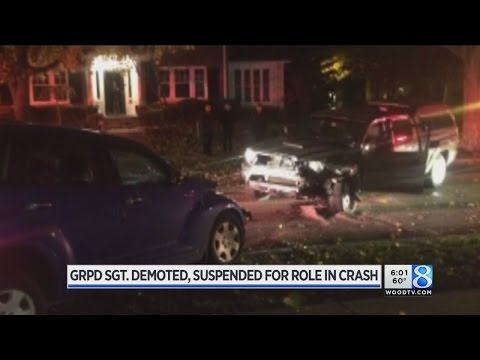
New recordings and video from night of ex-prosecutor's crash - Duration: 2:47.

3

WE ALSO HAVE NEW INFORMATION

SINCE 5 ON THE APPARENT COVER-

UP OF AN ALLEGED DRUNK DRIVING

CRASH CAUSED BY A FORMER KENT

COUNTY

PROSECUTOR.AT 5 WE TOLD YOU

ABOUT THE DEMOTION OF A

SERGEANT-- NOW AT 6 WE'RE

GETTING NEW AUDIO RECORDINGS.

3

3

24 HOUR NEWS 8'S LYNSEY

MUKOMEL IS IN THE NEWSROOM

WITH WHAT ELSE WE'VE

UNCOVERED.

3

IN ADDITION TO CONFIRMING SGT.

THOMAS WARWICK'S SUSPENSION

WITH THE CITY TONIGHT, IN THE

LAST HOUR WE'VE ALSO RECEIVED

MORE BODY CAM FOOTAGE AND

PHONE CALL RECORDINGS FROM

THAT CRASH.

3

WE'VE LEARNED OFFICER ADAM

ICKES CALLED LT. MATTHEW

JANISKEE AFTER THE CRASH

HAPPENED, EXPLAINING FORMER

ASSISTANT COUNTRY PROSECUTOR

JOSH KUIPER WAS QUOTE

"HAMMERED" GOING THE WRONG WAY

DOWN UNION AVENUE IN GRAND

RAPIDS BACK IN NOVEMBER.

ACCORDING TO THE TRANSCRIPT

THE LT. STOPPED OFFICER ICKES

FROM TALKING AND DIRECTED HIM

TO CALL AN UNRECORDED LINE.

HERE'S THAT RECORDING... THEN

YOU'LL SEE OFFICER ICKES TELL

KUIPER THAT HE WON'T BE

ARRESTED.

3

(( 17:11:29 POLICE

DEPARTMENT... LT JANISKEE ....

ALRIGHT 17:11:51 ))(( 17:15:09

JOSH GO AHEAD AND STEP OUT OF

THE CAR... GET HOME SAFE, OK.

17:15:46 ))

3

3

OK. 17:15:46 ))GET HOME SAFE,

OK. 17:15:46 ))

3

3

TO RECAP -- WARWICK ACCEPTED A

DEMOTION FROM SERGEANT TO

OFFICER AND A 160-DAY

SUSPENSION WITHOUT PAY FOR HIS

RESPONSE THAT NIGHT.OFFICER

ADAM ICKES REACHED A DEAL WITH

THE CITY TO SERVE A 30-DAY

SUSPENSION WITHOUT PAY.

LIEUTENANT MATTHEW JANISKEE IS

STILL FACING TERMINATION FOR

HIS INVOLVEMENT.HIS

TERMINATION HEARING IS

SCHEDULED FOR NEXT MONTH.

KUIPER RESIGNED FROM THE

PROSECUTOR'S OFFICE.

3

WE ARE GOING THROUGH DOZENS OF

PAGES AND MORE FOOTAGE

RELEASED TO US BY MICHIGAN

STATE POLICE AND THE CITY

THROUGH A FREEDOM OF

INFORMATION ACT REQUEST.I WILL

HAVE A FULL REPORT COMING UP

AT 11 ON WHAT ELSE WE'RE

LEARNING ABOUT HOW THE

DEPARTMENT HANDLED THE CRASH.

REPORTING AT THE LIVE DESK LMU

24 HOUR NEWS 8.

For more infomation >> New recordings and video from night of ex-prosecutor's crash - Duration: 2:47.

-------------------------------------------

A 5¼ minute video which deals with ageing and resettlement in a new commnity. - Duration: 5:19.

(orchestral music)

[Woman] - I felt totally lost.

I felt totally depleted.

(orchestral music)

When I lived in Ontario,

and I lived in a house, looking after my husband

and trying to deal with things.

And I was trying to deal with mental illnesses there.

And I wasn't aware of them, and I was

dealing with a lot of looking after a lot of things,

looking after the house and trying to keep things going.

And I felt that I had lost myself.

I felt totally depleted.

I didn't see any light at the end of the tunnel.

I thought, I'm gonna get old

and this is going to be the end of my life.

And, I thought, I have to escape.

My husband had just died,

so my life had taken a total turn.

At that time, soon after, I came

and visited my daughter here in Vancouver.

And I fell in love with Vancouver,

and I really wanted to be close

to this particular daughter, to Alicia.

When I came here at first, I was very excited.

And then,

I became really shocked

because I didn't know anything.

I didn't know where things were,

where places were, and I had

very little support system here.

I was used to having very close friends

around me all the time.

And all of a sudden I was without friends.

I had a daughter,

but I didn't have friends of my own age.

And that was a real loss for me.

I was living in an apartment building where I rented,

and you don't know your neighbors.

They're not really there for you.

You know, you walk past them, they walk past you,

and you can say hello, but you're living with people

that you have no connection with.

And so, I went on a search to try and find

networks where I could find people

that I could relate to and people that I could talk to.

And people that I could become friends with,

not just acquaintances.

I tried a meet up group, I tried a couple of meet up groups.

One was a little too young for me.

That didn't work for me at that time.

Then another one was really good

and there were people that I could relate to

at my age group.

I started to look for places where I could connect.

I went and took a course at SFU.

And I kept looking for places

that I would feel comfortable with,

and that I could make those kinds of relationships

that would sustain me.

One of the things that worked really well for me

was a UBC one, and it was

the University of Victoria Centre on Aging,

the self management of chronic disease,

and I have a chronic disease, which is diabetes.

And I loved the material in that course.

And it changed the way I dealt with my health issues.

But it also opened up a whole new world.

I became a facilitator for those kinds of courses.

I took a training course,

and that gave me meaning

and it really helped me to connect,

and it was something that I'm really grateful for.

I guess my journey is one that I'm really grateful

for so much that has happened in my life.

Having a success in one field has helped me

find another field to be successful in,

it's helped me, opened up other areas that I can look into.

It's helped me gain better health,

and I'm,

also tried to find a way to let go of things

that could be potentially draining for me again.

For issues that might make me depressed,

or might make me lose all these wonderful

feelings that I have now.

The fact that I know I have activities

that I can do on a daily basis, I mean,

how rich can your life be?

(orchestral music)

- It's really important that you keep your mind open.

Try something little,

and see if it will help you find more.

(orchestral music)

For more infomation >> A 5¼ minute video which deals with ageing and resettlement in a new commnity. - Duration: 5:19.

-------------------------------------------

A 5 minute video on retirement and loss of identity. - Duration: 4:57.

(piano music)

- [Noreen] I was concerned when I was preparing to retire

about that loss of identity.

(piano music)

After a 35 year career with one employer

it came to be a time that it was time to let that go,

and transition into retirement lifestyle.

And making that decision took a while.

There was a time, I know the time was right.

It just felt like the time is now.

So that was a process that I went though.

I was concerned when I was preparing to retire

about that loss of identity.

That was inevitable.

There was fear around losing that identity,

because it had a certain status attached to it,

and I enjoyed that.

It also gave me a definition of myself

and I knew that was going to be gone.

(piano music)

The big issue was,

"Well what am I going to do with my time?"

To start exploring I had to kind of sit myself down and go,

"Well what am I really interested in doing?"

And maybe things I haven't done before.

So I did research a few of the senior activity centers

and what kind of programs that were available there.

I did find some things of interest to pursue.

So I have been involved in a few of those activities.

The activity I was most interested in pursuing was acting.

Because all during, throughout my life

my friends, all feedback, they would say,

"Oh you should be on the stage.

"You should be on stage."

Brock House they have a couple

of acting programs

that were appropriate and I participated in both

of those for a while,

and then I checked our Barkley Manor,

and I heard about the acting program that they had there.

I've been going there weekly ever since.

(piano music)

The beauty of retirement is that you get to structure

your time table however you structure it.

You don't have to report to anybody else about that.

It's all up to you.

I did fill my days nine to five, Monday to Friday.

My calendar was basically full of things.

Whether it was a program I was going to

or meeting friends, or having lunch,

or going to a medical appointment.

There was not much wiggle room in my schedule either

to add in something spontaneously.

I was missing that spontaneity.

I felt like I need to make some space here

where I can be spontaneous.

(piano music)

Thinking about my identity today,

the first thing that comes to me is creativity.

Just being creative,

so certainly acting that's totally

a big piece of creativity.

Dancing as well.

Singing is another thing that gives me much joy.

I also draw and paint and write poetry,

and all those things.

This is what I've learned over time

is it's not important what the outcome is,

it's important what the process is to get

to wherever you end up.

It's happening so far so good.

We'll see how far it goes.

(piano music)

For more infomation >> A 5 minute video on retirement and loss of identity. - Duration: 4:57.

-------------------------------------------

Video: Ellicott City businesses dedicate Sunday to Malone family - Duration: 1:52.

AND THE COMMUNITY IS

, STILL RALLYING TO SUPPORT THE

FAMILY.

THERE ARE SEVERAL FUNDRAISERS IN

THE DAYS AHEAD INCLUDING ONE

, TONIGHT IN WHITE MARSH.

11-NEWS REPORTER KATE AMARA IS

LIVE THERE WITH DETAILS.

KATE?

KATE: LOVE FOR THE MALONES WILL

TAKE OVER DOWNTOWN ELLICOTT CITY

THIS SUNDAY.

FOUR RESTAURANTS AND BARS

TEAMING-UP FOR AN ALL-DAY EVENT

TO RAISE MONEY FOR THE MALONE

FAMILY.

KATIE AND BILL MALONE LOST SIX

OF THEIR NINE CHILDREN WHEN

THEIR NORTHEAST BALTIMORE HOME

WENT UP IN FLAMES LAST MONTH.

>> I THINK IT'S THE SPIRIT OF

THIS COMMUNITY AND ELLICOTT

CITY.

IT'S JUST SO IMPORTANT FOR US TO

GIVE BACK TO THE MALONE FAMILY.

KATE: THE IDEA WAS BORN AT THE

ELLICOTT MILLS BREWING COMPANY,

WHERE BILL MALONE WORKED FOR

SEVERAL YEARS.

WE SPOKE TO CO-OWNER TIM

OVER THE PHONE TODAY.

>> IT'S ONE THING TO HEAR SUCH A

TRAGIC STORY, IT'S ANOTHER TO

HAVE AN EMOTIONAL TIE TO IT, AND

THEN IT'S QUITE ANOTHER WHEN YOU

KNOW THAT THE PEOPLE INVOLVED

ARE JUST DECENT AND SWEET

PEOPLE.

>> WE HAVE FELT SO MUCH LOVE

FROM THE COMMUNITY IN THE PAST 7

MONTHS, IT JUST WASN'T EVEN

QUESTION FOR US NOT TO GIVE BACK

TO THEM.

KATE 20% OF RESTAURANT REVENUE

: WILL BE DONATED TO THE FAMILY.

OTHER BUSINESSES, PITCHING-IN

WITH SILENT AUCTION ITEMS.

MANY EMPLOYEES DONATING THEIR

TIME TO WORK THE EVENT.

AN EVENT, WHICH ORGANIZERS SAY,

IS ABOUT MORE THAN JUST RAISING

MONEY.

>> LET US, AS A COMMUNITY, PUT

OUR ARMS AROUND YOU AND LET YOU

KNOW YOU'RE NOT ALONE.

AND I THINK THAT'S JUST AS

IMPORTANT AS ANY DOLLAR WE CAN

HAND THE

KATE: SO THE ELLICOTT CITY EVENT

, GOES FROM 11:30 A.M. TO

MIDNIGHT THIS SUNDAY.

IT IS A DOWNTOWN ELLICOTT CITY.

BUT TONIGHT, THERE IS ANOTHER

FUNDRAISING EVENT GOING ON AT

THE RED ROBIN HERE AT THE WHITE

MARSH MALL.

For more infomation >> Video: Ellicott City businesses dedicate Sunday to Malone family - Duration: 1:52.

-------------------------------------------

A 5½ minute video relating to loss of partner and housing. - Duration: 5:30.

(melancholy music)

- [Woman] What am I gonna do?

How am I gonna stay in

the apartment that I'm in

because that's my home?

(music continues)

When I was diagnosed with breast cancer,

and my husband was with me,

he was there the whole time,

so while my chemo, my radiation,

the operation, everything,

and then I was cleared,

and then my husband was diagnosed with pancreatic cancer

in May of that year, and he died in September.

After my husband passed away,

I had to go to the bank and take a look at my finances,

and they explained everything, what my situation was.

The first thing, of course, that came to mind was,

"Oh my goodness, what am I gonna do?

"How am I gonna stay in the apartment that I'm in,

"because that's why I want to stay,

"because that's my home?"

I really felt like, "Oh my goodness."

Like, I mean, we worked both our lives.

Worked, my husband and I, so hard,

and, like, we should have a lot, lot more money.

(music continues)

One friend told me that I should

see about the SAFER program,

and I said, "Well, I go to

"the West End Seniors' Network all the time.

"Maybe they know something about it."

They said that they were going to review everything,

and, they called me, and said that

they have reviewed everything,

and that I will get some assistance,

and there'll be a letter in the mail.

I did get notified, and I got enough money

to pay my hydro,

my TV,

cable, and my telephone.

Just to get that,

approved for that,

it was like, yeah, it was such a relief,

because now I knew, I can stay there

for at least a year,

and that was, like, worth a million.

They also said that I should try and apply for

the guaranteed income, so I filled out all the forms again,

sent everything in, and about three months later,

I get a call, and they told me that I do qualify, in fact,

so that worked out well, and then they told me

I should apply for the bus pass,

and I did that, so for $45, I can ride the bus all year.

Like, I mean, it's just like, yeah.

It's just like one miracle after another.

(music continues)

It was a big relief, but the worry that I had then

and that I still have now, and that is, like,

with all the,

low rental, like there's hardly any rentals available,

and there's always that thing there,

one day, there was the thing on the news.

They were talking about rents going up 40% next year,

and I'm sitting there and I said, "Are you kidding me?"

Like, if I have to, if my rent goes up 40%, where do I go?

And that's scary.

Like, where do I go?

Where else can I rent if they're all gonna be like that?

I just said to myself, well, I'm going to relax.

I'm getting the help I need right now,

and hopefully, they will

just increase my rent 4% a year

like they have been doing, and by the time they go

crazy and go 40%, maybe I'll be ready for a senior's home.

The one thing I do have to do,

I think I enjoy the apartment,

and I'm very comfortable and everything,

but I'm still struggling with being there by myself.

It's just been a year, a little over a year

since my husband passed away.

The grief is there, but I try to be so positive,

and my thing now is that,

when it was the one year anniversary since he passed,

I said to myself, this is a celebration,

because he has been without pain for a whole year,

'cause the last two weeks, he was suffering quite a lot,

and I told him to go, and that I will be fine.

And it's turned out that everything

has worked out really well for me,

with the help of people.

(music continues)

For more infomation >> A 5½ minute video relating to loss of partner and housing. - Duration: 5:30.

-------------------------------------------

A 6¼ minute video on overcoming cancer as a senior. - Duration: 6:17.

(slow piano music)

- They said you've got a real serious problem.

We used to go down to the beach in White Rock,

and there weren't sunscreens at that time,

and so I got burnt,

sun burnt, serious sunburn, alright.

And didn't think too much of it.

They threw water on and,

but suddenly, when I was 30 years of age,

suddenly

items came up on the face, the ears,

the cheeks, and so on.

And it's a bit disconcerting (laughs)

because I was in sales in the pharmaceutical industry.

And so I got busy,

went to my GP.

He said you've been laying in the sun.

I said ya, 30 years ago.

You know? (laughs)

He said, right, he said that happens.

But he said I can take care of those,

so I said great.

So of course, liquid nitrogen, hmm,

which burns 'em out.

And that was a bit of a day (laughs)

'cause he did them all, but anyway

they healed and then, suddenly it happened again.

And that was about another

two years to three years.

(slow piano music)

So again, I went back to the doctor

and he said um, I'm going to refer you

to a skin person, surgeons.

They'd had a biopsy run and they said

you've got a real serious problem.

He said because you're now infected

and so what they do is called Mohs

which is where you go in

and take a segment of what you're going to heal

and it's sliced as thin as tissue paper.

Then that piece that comes out goes to the lab,

and they say if you're killed the, the thing, it's free.

You know, in other words, you're clear

is the term that they use.

It went through and it was quite successful

which, it was then I was then free of it all.

The next time it came up, believe it or not

I was in England, so (laughs)

over in England, our daughter,

she's a psychotherapist, and she said

there's an excellent skin surgeon here.

He worked on it and I was in the operating room

with a nurse and a lab person,

and of course the surgeon.

So it was successful.

So I thought again, (laughs)

disappointed later, but I suddenly got into,

right down in here five months ago,

that suddenly it surfaced again.

And went through the same process again.

And they said we want to see you

on the third of

November, right.

And since then, it's fine.

(slow piano music)

I never had a really serious medical condition,

but why did I approach

for this to sit, to try and get the public hey,

get sunscreen, that's the point.

Because I was foolish to not have sun protection.

I was fortunate to have

some medical people

who really worked fine. (laughs)

My wife happens to be a nurse,

and she was a great help

because doctors would talk to her.

She'd come along and they would say yes,

and you know, so you got good service,

and it worked out quite well.

I like to tell people that if you really

become involved with whatever you've got,

don't give up because you can come

to the wonderful place you've got here.

You can learn computer, you can do all sorts of things,

I say just to keep the brain going,

and to enjoy life.

So life's good.

(slow piano music)

For more infomation >> A 6¼ minute video on overcoming cancer as a senior. - Duration: 6:17.

-------------------------------------------

A 4½ minute video on complications related to surgery. - Duration: 4:35.

(mellow instrumental music)

- If I hadn't had the surgery I would be dying

because you can't live with malnutrition for very long.

In 2013 I was tired a lot.

But I had a lot of friends at the same time

boosting me up and keeping me going.

I just got to the point where I wanted to be better.

When you can't you have to hang onto walls

to get to the washroom and stuff,

then that's when I decided that I needed

to pursue this a little bit more and see what can be done.

I went through a gamut of tests to see if there was anything

that would show up.

Other than my blood work being off kilter they didn't know.

And I'd been going back and in and out of hospitals

for two or three years trying to figure out

what was going on.

Trying to build me up with blood transfusions,

iron infusions, and nothing was working.

(mellow instrumental music)

The doctors, after determining that I was basically

suffering malnutrition due to malabsorption

determined that the only possibility maybe

that would work for me would be to reverse

a gastric bypass that I had back in '75.

That was only a guesswork at the time

because he didn't know if it could even be done

because it had never been done before.

I said what, I haven't got anything to lose,

let's do it.

I was in the hospital for about three months.

The first month was building me up

with special nutrients and IV nutrients

plus as much as I could eat they said.

Keep on eating, keep on eating.

The extra nutrients are what built me up, too.

I also had another specialist in the hospital

who worked at balancing my electrolytes

and that which were apparently always wonky,

and he got that balanced.

I still do things that he told me to do

to keep the electrolytes going properly.

I had a lot of support in that respect.

My husband and I separated 20 years ago,

but he has always been there for me for everything

I've gone through over the last 20 years.

Anything, health issues, he was always there.

He passed away last February.

He made sure that I was okay.

Anytime I needed some groceries

he would get groceries for me.

My friends and my family my daughter, she came from Holland

for the surgery and stayed to make sure everything

was okay and then went back home.

Then it was just a slow process just being careful

about what I'm eating.

At first I wasn't able to eat raw food.

But I gradually worked it up.

After six months I was feeling pretty good,

pretty strong.

I went on a cruise for seven days to Alaska

in September and that worked well.

I just from then on I've gotten stronger and stronger.

(mellow instrumental music)

If I hadn't had the surgery I would be dying

because you can't live with malnutrition for very long.

So today I'm now super healthy and I'm making up

for lost time.

I keep all the friends around and I keep active now.

I do exercise classes twice a week.

I do volunteer at West End Seniors' Network

once a week.

So three out of five days I'm busy doing something.

It just feels good.

(mellow instrumental music)

For more infomation >> A 4½ minute video on complications related to surgery. - Duration: 4:35.

-------------------------------------------

A 4½ minute video on the challenges of lving with chronic pain. - Duration: 4:30.

(piano music)

[Woman] - I've learned that no matter what my disability is,

I've always got something to give.

My experience can always benefit somebody else.

(piano music)

Approximately five years ago,

I ended up on permanent disability,

having worked at a really high-functioning job for 16 years,

and yeah, everything really changed

when I became disabled.

It was, I'd no sense of purpose anymore,

nobody was expecting me anywhere,

and so I really had a hard time.

I had a lot of physical pain.

I have a partner who has been disabled for 19 years,

and I didn't realize until I was off work,

is that was taking her an entire day

to get in that condition,

to not worry me, so that

I was not preoccupied in my work.

Just by the fact that all of a sudden,

I just felt like I just landed somewhere,

and I looked around and I thought,

"Well, things are a lot worse here than I thought."

I mentally had had a full-blown breakdown,

nervous breakdown.

So I mean, part of my memory was lost,

I just could not really

cope that well.

(piano music)

And so my partner took me to all the doctors,

and one benefit of that that we kind of discussed later

is that she had the benefit of going through all of that,

she was disabled at 49, funny enough,

and as well,

she just kind of showed me the ropes of the medical system.

So I just found that there was a stigma.

I have taken medication for anxiety disorder

since that time I had the breakdown.

And it'd be really funny,

I'd go to doctors, and they'd say

"Well, what medication do you take?"

And the minute I would say I was taking an

anti-depressant and how much I was taking,

I could just feel the shift in their attitude.

Everywhere I went they said, "You know,

"your condition's progressive, there's nothing we can do.

"We can do pain management."

So it was never kind of good enough for me.

(piano music)

You know now it's a matter that it's not,

I'm not gonna have a fix.

I have to alter my life,

I have to recognize my limitations,

and I have to make my life fit around my limitations.

The process I've gone through, the transitioning,

and the adjustments that have had to be made,

one being very recent about moving

to a smaller living space that's more controllable

for me to look after and maintain.

And I think about where my life

and our life is right now.

I would say the quality of life I think we have

on a scale of one to 10 would be about an eight,

maybe even 9.

I became aware later about accessing services,

because the paperwork is so overwhelming.

That there are services out there for seniors now

if you can go into a senior center or Kay's Place,

Barclay Manor, anywhere.

They can steer you towards some type of support.

(piano music)

I've learned that no matter what my disability is,

I've always got something to give.

My experience can always benefit somebody else.

One thing can just look absolutely horrendous one day,

and if I pause and stop myself,

and say, "OK, you know, I know from my experience

"that acceptance is the answer to all my problems."

(piano music)

For more infomation >> A 4½ minute video on the challenges of lving with chronic pain. - Duration: 4:30.

-------------------------------------------

Climate and Water Outlook, March–May 2017 - Duration: 4:02.

Welcome to the Climate and Water Outlook for Autumn 2017.

Summer has seen record-breaking heat in eastern Australia, but also record-breaking rainfall

in the north and the southwest.

Above-average temperatures are likely to continue in autumn; and the start of the southern cropping

season is likely to be drier than average.

But first, let's look at recent conditions.

Tropical lows and monsoon bursts have brought widespread rainfall and floods to western

and central Australia.

Southwest Western Australia had its second wettest February on record, with most of that

rain falling in the first two weeks.

While parts of southern WA had a cool start to the year, eastern Australia was very hot,

particularly in New South Wales and southern Queensland.

Moree and Mungindi have had more than 50 days in a row above 35°C.

The second week of February saw eastern Australia's most severe heatwave since 2009.

On the 11th, the average temperature across all of New South Wales was 44°C. Even coastal

towns didn't escape the extreme heat.

Fire danger levels during the heatwave were the highest on record in some parts of New

South Wales, with several severe bushfires affecting the State.

Soil moisture has been above average in areas receiving tropical summer rains.

However, in southeast Queensland and northeast New South Wales, there's been little rain since September.

Combined with very high temperatures, soils have rapidly become drier than average in these regions.

Low rainfall and high temperatures in the eastern States have led to a recent drop in

water storages, but they are still far higher than this time last year.

So what's driving Australia's climate right now?

In recent weeks, the central and eastern tropical Pacific Ocean has warmed, and climate models

suggest this warming is likely to continue during autumn.

This is in contrast to this time last year, when the Pacific was starting to cool.

Although it's early days, we can almost certainly rule out a La Niña for 2017.

While our ENSO dial is at inactive, we'll be watching the Pacific Ocean and the climate

models closely for any further warming.

The rainfall outlook for March–May indicates below-average rainfall is likely over much of Australia.

Several international models we survey also show dry outlooks.

Outlook accuracy is moderate at this time of year.

What does this mean for the 2017 Autumn Break?

Early indications are that these rains could be late.

Turning to the streamflow forecast for February–April 2017.

Median to high streamflows are most likely at 98 locations.

Low flows are likely at 28 locations, mainly in southern Australia.

Accuracy for our streamflow forecasts is moderate to high at this time of year.

In terms of temperatures: Days and nights are likely to be cooler than average in parts

of the far north, but warmer than average over the rest of Australia.

Further heatwaves are possible.

Temperature outlook accuracy is low to moderate at this time of year.

So in summary: Rainfall is likely to be below average for much of Australia; near-median

to high streamflows are likely in most places; temperatures are expected to be warmer than

average; and heatwave and bushfire risks are raised in many areas.

Our next video will be released on Thursday 30 March.

For the Bureau of Meteorology, I'm Robyn Duell.

For more infomation >> Climate and Water Outlook, March–May 2017 - Duration: 4:02.

-------------------------------------------

Games for Kids Talking Angela Great Makeover for Children Kids Video Android Youtube Kids Animation - Duration: 10:37.

Games for Kids Talking Angela Great Makeover for Children Kids Video Android Youtube Kids Animation

Games,for,Kids,My,Talking,Angela,Great,Makeover,Children,Video,Android,Games for Kids,My Talking Angela,Great Makeover for Children,My Talking Angela Great Makeover for Children,Kids Video,youtube kids,Talking Angela,My Talking Angela Android,Android My Talking Angela,My Talking Angela Game,My Talking Angela Gameplay,My Talking Angela Let´s Play,Gameplay My Talking Angela,My Talking Angela Android Gameplay,Play My Talking Angela,gaming

For more infomation >> Games for Kids Talking Angela Great Makeover for Children Kids Video Android Youtube Kids Animation - Duration: 10:37.

-------------------------------------------

A 6¼ minute video on becoming a double lung transplant. - Duration: 6:23.

(light piano music)

- When I think about the lung transplant,

it's the first time that I had hope,

that I could see a light at the end of the tunnel.

My story really begins in 2008.

When I'd been having breathing problems

but that particular day, I was really short of breath

and so I took myself to emergency

and the attending physician there

couldn't believe I even walked in,

my oxygen level was so low.

So, they admitted me right away and through tests,

I was diagnosed with C.O.P.D. and severe emphysema.

I was given medications, puffers,

to help with my breathing and every four or five months,

I visited the internist, the specialist, the lung specialist

and at one point, he was doing a research study on C.O.P.D.

and its effects and then, he asked twice

before I finally accepted to be part of the research.

So, I said I would.

I want to understand what's happening

and also, I want to contribute in any way to find a cure

and then I did a test, a breathing test,

and the aid says, "Oh, my goodness."

He says, "You can't be part of the study

"because you have to have a minimum of 30% lung capacity

"and your lung capacity is 15."

Well, that's the first time

I heard how severe my disease was.

At that point, that's when I started my regime

of oxygen, they realized

that I couldn't live without oxygen anymore.

That lasted for a number of years

and then, I was able to get a portable concentrator.

It allowed me to travel more,

to go out of the house and visit.

One of the places I went was to King's Gate Mall

and there, they had a clinic, a pulmonary clinic,

put on by St. Paul's.

What they did is tell me about a pulmonary rehab program.

So, I was very fortunate to be able to be part

of that kind of program, it saved my life,

and switched my doctors.

He recommended, on our first meeting,

that I should be considered for a lung transplant

despite my age.

When I think about a lung transplant,

it's the first time that I had hope,

that I could see a light at the end of the tunnel.

I was accepted to be on the list.

So, to be on the list, you're on call 24 hours a day

and you don't know when that call's gonna come.

For me, it was 11 months later.

I was coming home, I was on the bus,

it was about 1 o'clock, 1:30,

and I got a phone call from the clinic saying,

"This is your call."

(chuckles)

Transplant surgery normally takes about 8 1/2 hours

and the recovery, you're there

for at least two, three, four days.

Things were going very well.

As I clipped right along from I.C.U, stepped down

to my private room and I was breathing on my own,

no oxygen, walking unaided,

I used a walker for a while but what happened

was that my lung filled up with fluid

and I caught a virus and so, they had to treat it.

So eventually, I was in I.C.U. for a couple days

then stepped down into a private room.

The biggest change for me after the lung transplant

and the point in which I knew things were really different

was when I was still in the hospital

and I started walking and I could walk four and five times

around the whole floor and not be out of breath.

I'd take my oxygen meter, I'd measure my oxygen level,

it'd be 99 to 100 when I'm walking.

And that's incredible.

As a result of the operation,

I feel very fortunate.

Fortunate in the things I'm able to do now

that I could not do before.

There's a whole new world opened up for me.

One of the things that I decided to do

is to become an advocate for lung problems.

So, I've become very active in the support groups.

I've become very active with the B.C. Lung Association.

I've been interviewed a number of times

and I, I wanna give back to others what I received.

Không có nhận xét nào:

Đăng nhận xét